Translate

Sunday, 11 November 2018

CULTURE OF SEA CUCUMBER


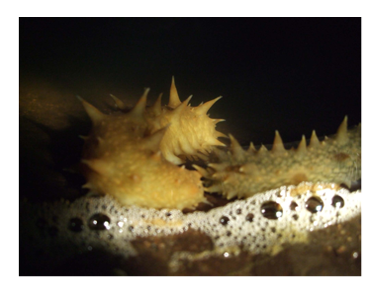
Holothurian, commonly called as sea cucumbers, is a group of economically important echinoderms.  Which are consumed either fresh or boiled or prepared as beache- de-mer (trepang) by people of Japan, Korea, China etc. Body wall, ovaries, intestine and respiratory trees are considered delicious food for Japanese. Holothurians exhibit a world wide distribution.  About 1200 species are recorded as belonging to the class Holothuridea. There are around 40 edible species.   Along the Indian coast  Holothuria scabra commonly called ‘sand fish’, is the predominant species. Whereas in Japan and Korea Stichopus japonicus  predominates.  Some species live on hard substrates like rocks, coral reef etc and vary in their habitats from foreshore to deep water zones. The other Holothurians of commercial value are  Holothuria nobilis  (black teat fish),  H. Fusogilia (white teat fish),  Actinopyga  echinites  (deep water red fish),   A.milaris  (black fish),  Thelonata ananas (prickly red fish),  Holothuria ata  (lolly fish),  H. Fuscopuncata  (elephants trunk fish) etc.

Both sandfish ( Holothuria scabra) and golden sandfish (H. lessoni) are considered to have the best potential for aquaculture because they have many attributes that make them suitable for hatchery production

BIOLOGY

The internal organs of the cucumber lay within the tube-like body chamber surrounded by the skin and a layer of longitudinal muscle bands. It is the skin and muscle bands that are the edible part of the animal. The internal organs consist of the digestive system for food processing, the gonad for reproduction, the respiratory trees for the removal of oxygen from the water, and a nerve ring that directs the operation of the muscles and tentacles.  The cucumber is capable of eviscerating (casting off) its internal body organs during times of stress which can later be regenerated.
Evisceration
The sea cucumber is a non-selective suspension feeder, taking its food indiscriminately from the surrounding water. The small bits of detritus and microscopic organisms that are floating just above the bottom are trapped by the cucumber's tentacles.There are ten tentacles that are covered with a sticky mucous and are extended in the water until they are filled with food particles. The sexes are separate, but microscopic examination of the gonad is the only reliable way to distinguish males from females. The gonad is located along one side of the body cavity and begins to produce eggs or sperm in the fall for the next spring's spawning season.  Spawning occurs from about late March to mid-April and coincides with the spring plankton bloom.
At this time the eggs and sperm are released into the water column where the eggs are fertilized and develop into a brief larval stage, at which time the animals are bright red, planktonic and called a "pentacula". By the end of May the larvae have evolved into juveniles and settled to the bottom.

LIFE HISTORY

Holothurians usually spawn in the late afternoon or evening or during night. During spawning, the males release the spermatozoa first and the females release the eggs.The males first lift the anterior end and perform swaying movements for some time after which they start releasing sperm and it continues for 1-2 hours. Ripe females, if any are present nearby, exhibit responsive behaviour. The anterior region of the female gets bulged and eggs are released through the gonopore forcefully in a continuous jet.
The mass of eggs are released appear light yellow and mucus like. The fertilization is external. Taking place in water. One adult female release about 1 million eggs. Eggs are spherical, about 180-200 microns in size. The auricularia larva hatches out after 48 hours. The auricularia larva is transparent, pelagic, it is slipper shaped and performs locomotion by the movement of flagella of the ectodermal cells that forms ridges or bands. The larva has a digestive tract consisting of mouth, pharings, stomach, and anus. There are three coelomic sacs- hydrocoel, and right and left somatocoels.

REPRODUCTION

Holothuria  scabra   attains a length of  400 mm and weight of  500g  and lives on sandy muddy bottom and become sexually mature at 18 months. The size at first maturity is 210 mm. the sexes are separate. There is no distinct sexual dimorphism. The ovary in females and testes in male are in the form of a tuft of tubules attached to the dorsal mesentery, through which the gonoduct passes terminating in gonopore situated on the dorsal side near the oral region.
The gonadal development is distinguishable into five stages such as Immature, resting, growing, mature, and post spawning phases. During the immature and resting stage, the ovarian tubules are transparent, short and thin distal end of tubules are club shaped. During grawing phase the tubules are having opaque spherical oocytes 20-120 microns in diameter. During the mature phase, the tubules are swollen containing ripe oocytes of 150-200 . It has been reported to breed twice in a year, first spawning season in from March to May and second during October to December in Gulf of Mannar.

Culture of sea cucumber

Technique for pond culture.

The ponds should be located in a area with free tidal current, The size of one pond is between 30-300mu (2-20 hectares) water depth is above 1.8-2 m, salinity is above 26 ppt year-round.  Water circulation is very important factor.  Rocks and concrete are to be applied to strengthen the inner layer of pond wall. The best substrate of pond bottom would be solid mud-sand or sand- mud; the substrate will affect the growth rate and survival tremendously. The sea cucumber culture purposes including: mud removal, disinfection and reef building. No feeding required in most of ponds. Sea cucumbers mainly depend on natural food resources. Routine monitoring of salinity, temperature, pH, alkalinity, water colour, transparency and adjust if required.The hatchery should have an algal culture unit to provide sufficient quantity of desired species of algae such as Isochrysis galbana species and Dunaliella species.
 In addition mixed culture predominated by Chaetoceros also shall be required.

Selection and construction of the culture ponds: 


 The farm sites should provide suitable conditions for the growth of sea cucumbers.  A supply of clean   and unpolluted seawater should be easily accessible. Salinity levels should range between 25 and 35, with optimal values around 27-32.  Ponds with muddy and sandy bottoms and of 2-3 hectares in size are preferred; however some operators use ponds as large as 7 hectares.  If necessary, stones or other artificial materials are placed in the pond to provide an adequate substrate for sea cucumbers to aestivate and live through cold winters.  Hard substrates should cover 50-70 % of the bottom.  The depth of water should be between 1.5 to 2 m and the seawater temperature maintained between 0-30 °C.

Dam Pond Culture

Dam pond can be build by concrete based on the local geomorphological characters in a shallow intertidal area, or a bay with rocky substrate, or by small reef islands area, where there is natural distribution of sea cucumber.  The artificial reefs are built by rocks inside the pond. The height of the dam is based on the high tide line, usually is higher than 2.0m above the ground. There are water intake and release holes underneath the dam, so the water exchange can be driven by tidal action. Seeding density:30 seeds/m2 for 1- 2cm seed, 10 seeds/m2 For 5cm seed.

Longline culture in open sea

 In an area there is less wave action, free tidal current, the existing long line system can be used for sea cucumber farming. The mesh size of the lantern nets is around 1.0cm, open and close by zipper, so it is easy to do the routine feeding operation. Scallop net, abalone net and modified plastic bucket can all be used for sea cucumber culture, and most facilities can do the poly-culture with abalone.  Seeding density is around 200- 300seeds/m2 for 5 cm seed, placed 5-8m below the water surface, The density has to be reduced as the sea cucumbers grow. This type of technique can be used as poly-culture with kelp as well.

Seabed cage culture

In a bay area, round or rectangle cages (2 ×1.5×1) were built with steel bars, covered with 1.0cm polyethylene mesh netting outside the cage and hold rocks inside the cage. A 5cm space is needed to keep the rock from the frame of the cage to prevent netting damage due to friction. Seeding density: 3-5cm seed at 200-300 seeds/m2.  Routine management includes monitoring for mesh damage and reducing the sea cucumber’s density through the grow-out period.

Artificial breeding techniques

Holothurians hatchery should have a Brood stock maintenance unit, Spawning unit, Larval rearing unit and an Algal culture unit.

Brood stock maintenance unit

The Brood stock is usually collected from wild as well as from commercial catches and induced to spawn immediately or held in land based tanks and conditioned in captivity. 
Sand fish live in high nutrient environment at densities of 100/ha. Tropical sea cucumber can be difficult to hold in captivity and reduced feeding, weight loss, and poor gonad development. The large and healthy specimens which are not injured or eviscerated during capture are chosen for breeding. Collection of breeders is done during the breeding season i.e., March to May or October to December.

Preparation of brood stock tank: 

FRP tanks of 1 ton capacity provided with 6 cm thick sand at the bottom are used for keeping the breeders brought from natural ground. They are stocked at the rate of  20-30 adults in one tank.
The sand is also brought from the natural beds. These animals usually live buried in the sand and hence the sandy bottom is recommended. The tank is filled with filtered, clear sea water of about 32-35ppt. 
The water has to be changed every day, and sand is changed once in a fortnight. Feeding is done with fresh algae brought from the sea and ground to a fine paste which is given in the tank once in a week. Excess food may cause water fouling. In case of any water fouling, the sea cucumbers eviscerate and become useless for breeding. As algal paste settles to the bottom, the sea cucumber ingests the same with sand. If the feeding is not proper the animal gets shrunken and are the specimen not fit for spawning purpose. The Brood stock rearing tanks are kept in an air-conditioned room to maintain a low temperature of 18-20 degree c.

Spawning unit


Spawning is carried out in rectangular FRP tanks of about 100 litre capacity. The provision for an immersion heater with thermostat, thermometer and aerator are provided in the tank for thermal stimulation of spawners. . After introduction the spawners into the tank having filtered, clear and clean sea water, the temperature of the water is raised by 3c-5c by using the immersion heater. This thermal stimulation induces the sea cucumbers to spawn. This is the most widely used and most reliable method to induce the holothurians to spawn.

Apart from the thermal stimulation there are three other ways to do the breeding of holothurians. These are (1) Natural Spawning (2) Stripping and (3) stimulation through drying and powerful jet of water.

1. Natural spawning

       The male and female may release the gametes into the surrounding water without any artificial stimulation.

2. Stripping

This is done mainly on an experimental scale only.  The animals are cut open from cloaca to mouth through the dorsal side. The ovary which is translucent is taken out from the female and the same is slightly dried in a shade. It is then placed in sea water in a petridish and punctured with the scissors to release the eggs into the sea water. In the same way, the testis is taken out and cut into pieces. When the sperm move out in the water it is mixed with the eggs kept in a beaker with sea water. Mild aeration fecilates higher rate of fertilization.

3. Stimulation through Drying and powerful jet of sea water

The breeders conditioned for more than a weak in the hatchery are utilized for this purpose . First of all water in the brood stock tank is removed and specimen are dried in a shade for about half an hour. After this a powerful jet of water is sprayed on the specimens for a few minutes. Then the animals are put back into the tanks with sea water.
After 1-2 hours, the animals move up the tank wall and exhibit swaying movement indicating the release of gametes. First the males release the sperm and after one hour the females release the eggs.

Larval rearing unit

After the spawn and eggs are released, the breeders are removed from the tank carefully. The fertilized eggs are removed to the rearing tanks. The auricularia lavae hatch out after 48 hours. The healthy larva occupies the surface layer of water whereas dead or deformed one settles at the lower layer of water column or at the bottom of the tank. Those settled at the bottom are siphoned out. The healthy larvae are collected in a sieve and counted using a plankton counting chamber. Then the larva are released into the rearing tank containing clean, clean filtered sea water at density of 300 to 700 numbers per liter. The larvae are taken out once in 3 days to clean the tank to avoid infestation of other organisms.The larva is fed on micro algae Isochrysis galbana, two times a day.. This may increased or decreased depending on the stage of larvae. After 4-5 days, the larvae may be fed with mixed culture of phytoplankton mainly having Chaetoceros.
Under the above conditions of rearing, the auricularia develops to Doliolaria larva between 2-3days.  The Doliolaria  larva transforms into the pentacula larva within 10days. The pentacula is the creeping stage.  Late pentacula larvae settle on hard surface provided suitable substratum is provided in the tank. Hence, Artificial settling bases (settlers) are provided for them to settle. 

Two types of settling bases are tried.

(1)  polythene sheets are taken and kept in a tank kept outdoors having enough sunlight. For 4-5 days ,  filtered sea water is circulated continuously. Benthic Diatoms and other algae settle on these sheets. These are kept suspended in the water having late Doliolaria which are about to settle. The larvae settle on them as it gets food and hard surfaces.

 (2) In another type of settlers used, the polytheen sheets are kept in a tank having sea water. In this, filtered algal extract (50 mu filter) is added. Usually species of algae sargassum are used to make the extract. Algal extracts shall stick to the sheets. Fresh extract is put daily and the water is also changed daily. After 4-5 days. when the sheet is covered with algal extract it is given as settling base for the larvae. Juveniles that settle to the hard substrate has very weak motility. Hence, algal extract is again given daily twice morning and evening. Which is filtered through 40 micros sieve, After one month, 80 micron sieve can be used, and large sized juveniles of 15-20 mm size are separated and put in tank with very fine sand. There are also fed on algal extract. Optimum density of larvae should be adjusted to 200-500individuals per square meter.

Nursing of juvenile sea cucumbers: 

As the juveniles grow, the water quality and dissolved oxygen must be maintained at the optimal level.

 Increasing aeration and water exchange rates becomes necessary. The oxygen level has to be maintained above 5 mg/L. It is also important to use formulated feed that can be digested and absorbed easily. Experimental results have shown that the growth rate of juveniles fed on the formulated feed is at least two times higher than that of individuals fed on traditional feed during the 20 to 30 day period. As the accumulation of excess food and faeces increase, harmful germs tend to multiply rapidly and can cause very serious disease outbreaks among the juvenile sea cucumbers, including what is known as the ‘stomach ulcer’. Another disease is ‘white muscle syndrome’ which causes muscle tissues to turn white and rigid.

Transfer of young sea cucumbers to the pond:

 It has been demonstrated that the release of young sea cucumbers measuring 2-3 cm in body length produce the best farming results. These will attain commercial size after 1.5 years. For an optimal growth the culture density should not exceed 10 individuals/m2.

Environmental Factors Affecting Larval Rearing

The ideal temperature is reported to be 27C-29C, Aeration is carried out in larval rearing tanks to maintain oxygen at saturation level (above 5mg/L).  pH of the water may be between 6 and 9. Normal sea water has a pH of 7.5 to 8.6 which is suitable. Normal sea water salinity (32 to 35ppt) is favourable. If salinity falls lower than 12.9 ppt. the larvae shall die.  Most favourable salinity has been shown to be between 26 to 32.7 ppt. Ammoniacal nitrogen should not exceed 500 mg per cubic meters. It tolerates a range of 70-430 mg/m3.

Larve stages
1000,000 juveniles / kg 

6000 juveniles / kg 

600 juveniles / kg 

200 juveniles / kg

Management: 

Sea cucumbers can be farmed with shrimp and certain species of finfish, although they are commonly reared alone.  Prior to stocking the ponds with the hatchery-reared sea cucumber juveniles, It is necessary to clean and sterilize the ponds as well as inoculate the seawater with benthic Diatoms.  These measures will provide an appropriate culture environment and ensure high survival rates. The addition of formulated feed will also enhance growth particularly during spring and autumn. Some field tests have shown that the growth rate of sea cucumbers fed on formulated feed is as high as two times that of non-fed individuals.

Nutritional value of seed cucumber

It is a healthy food. It consists of 21.5% proteins, Mucopolysaachraide, minerals and other biological active substance. Recent medical research proved that the muscle aging is related to reduction of acid Mucopolysaccharide. It has cancer resistant effect, it involved in the enhancement of immune system, and anti blood clotting. It can be used to cure or additional therapeutic method for some desease: such as tuberculosis (TB), stress, erection problems, stomach, duodenum ulceration, diabetes, aplastic anemia.

FISHING DEVICES IN INDIA - Fish Traps and Hook & Lines

India is blessed with abundant water resources in different forms and with diverse fish fauna. So the fishing techniques are also have much importance. Different kinds of fishing techniques are practiced in India from earlier days. These methods are wide in range from hand picking to modern trawl.
The craft and gears used in different areas are different by their design based on the fish species, available materials in the geographic region. Also based on the nature of aquatic resource. The gears are classified in many manner, Including use, materials used to make, shape etc. Fish traps and hook& line are the most primitive type of fishing gears.

Fish Traps

Trapping- an earliest method of fishing. Traps- impounding devices into which an organism is lured and troy which escape is made difficult because of the non-return device is fixed at the entrance
According to Job &Pantulu, traps being fixed engines do not require continuity of attention and vigilance on the part of the operation but can be left to function themselves and secure a catch while the operator is engaged in other occupation. Trap fishing have economic and energy related advantages over the active search and capture fisheries. They require modest investment and due to their efficiency, simplicity and the quality of catch obtained, this method is widely used in all water bodies. 
In trapping the fish remain live or in good condition for a long time. Fish traps are operated in both inland and marine waters throughout India because of it is an eco friendly method. The artisanal fishermen in inland waters use primitive models of trapping. Modern traps are generally made up of plastics replacing the conventional bamboo sticks etc. and having separate part which can be assembled and dismantled easily.
Traps made up off twigs of Palmyra leaf and bamboo splinters are used in Tamilnadu, Kerala,Lakshadweep and Andaman Islands.

TYPES OF TRAPS

PLUNGE BASKET

Plunge basket is otherwise called as cover pots. In Kerala, commonly known as ottal or kuthukoodu. 
It is conical in shape with the size of 50-70 cm height, 40-50 cm width at the lower and 15 cm at the top. Normally 10mm size bamboo splinters or sticks are used for constructing ottal. Split cane or other materials are used to keep the ribs in position.
It is mainly used to trapping freshwater Prawn (Macrobrachium rosenbergii), other prawns and crabs. The free wide ends are sharpened to push down and fixed temporarily in mud. 
Narrow end is cover with cotton cloth and stitched with cotton or soft materials to avoid damage to operator.  Plunge basket in northeast states mainly in Assam called polo,and Polui  in West Bengal.

BOX TRAP

Box trap have ‘D’ shape or rectangular shape. In north Kerala this is known as chempallikkodu because of catching chembally (Lutjanus argentimaculatus), made up of split bamboo or arecanut tree with around 1.4*0.6*0.6 m size. Bottom piece is rectangular and fabricated used 10-15 strips have 7.4m length and 30-35 with 0.6m length kept perpendicular. It is also used to catch- Etroplus suratensis , Scylla serrata and Epinephelus spp. Etc.
Box traps in northeast are bolotha /pori and tesung purag& hookuri are 

BOX TRAP


FILTER TRAP

Filter trap, locally known as padal made up of the coconut leaf sticks (eerkil) or bamboo splinters in a cylindrical shape. It is about 0.6m in length with a circular mouth of about 0.4m diameter at one end and other end of the slivers are bunched and tried so as to close it. Few traps or creeper stem hoops are fixed inside the trap to give a cylindrical shape. To prevent the slivers from opening 6-7 encircling lacings using coir are also given.Filter traps are set against the receding current in shallow rivulets and pokkali fields.
FILTER TRAP

APRONED FILTER TRAP

This is an improved filter trap popularly known as tharapadal in north Kerala.
This is a simple modification of the cone cage.
APRONED FILTER TRAP

SCREEN BARRIERS

Long leaders of converging screens erected in shallow waters to lead the fishes into the chambers fixed in the end is known as fish fences or screen barriers. This type of trap is fixed during high tide and removed during the next low tide and the fish actively swim up into the barrier.The barrier made up of stone in Gujarat known as vada.
SCREEN BARRIERS


Bamboo barrier

These are large encloses with retarding devices erected in shallow waters where an extensive tract of flooded land is in the process of draining.Life of bamboo screen is about one year where as screen made up of retting may last for several years.

Net barrier

Synthetic netting is cheaper and easy way to trap fishing by screening. The disco net is replacing the traditional theta khonda made of split bamboo and cotton twins.

ARIAL TRAP

These are specialized traps to capture fishes that jump when faced with an impediment. These fishes can be caught on the surface in boxes, rafts, boats and nets (Verandah nets). The fishes are enticed to jump out of water by placing obstacles and are caught in the air by special devices obstructing their jumps. Sometimes the fish are frightened to get them to jump out of the water. Thottilvala- a kind of aerial trap common in Kerala. The commonly used aerial traps in the northeast are Letidiya (Mud trench), and Dolonga (Verandah net).
ARIAL TRAP
A mud trench is constructed in the water channel which blocks the flow of water. The sides of the trench are elevated creating a muddy pit in between it. When the fish encounter the obstruction, they try to jump over the barrier and fall in the mud and collects them by hand. Channa sp. and Puntius sp. are commonly caught through the aerial trapping. It is also used for the trapping of shrimps in Kerala, known as padal changadam. This is a fishing technique based on the shrimp’s reflex action to physical stimulation and is being used for harvesting the shrimps in perennial aquaculture farms in Kerala.

TUBULAR TRAPS

These are the traps or enticing devices exclusive of those made of textile which prevents the escape of fish by means of trap doors provided with non return valves. The traps vary in shapes. The catch comprises of fishes such as Mastacembalusaculeatus, M. armatus, Mysrus spp. Channa, etc. 

SHELTER TRAPS 

Specifically designed and operated considering the nature of fish to take safe shelter are known as shelter traps or habitat traps are provided with tree branches, shrubs, and twigs. They come in various size and shapes: Quadrangular, Conical, Cylindrical and Circular. Placed in low lying areas out of the water after 3 to 5 days and the fishes are taken out after removing the materials provided for shelter. 
These traps are tied to a fixed bamboo pole with a strong rope to prevent displacement in the water. 
The catch mainly- Mastacembelus armatus  (tire track eel), Mystus spp., Puntius spp., Clarias batrachus, Channa spp, Notopterus notopterus (bronze featherback), small prawns.Etc. 

HOOK & LINES

Hook and line this might be the one of the oldest and famous fishing method all over the world and one of the most dominant fishing methods. It is very economically viable technique to exploit the large pelagic, column and demersal predator fishes. The principle of line fishing is to offer bait and entice the fish or any other aquatic organism so that it can be lifted from the water together with the bait. In the primitive fisheries there existed curved hooks made of various perishable materials of plant and animal origin like Thorns, bones, tortoise shell, oyster shell and whale bone.Metals are used in modern days. The most important characteristic of hooks are their gap and their spread to ensure that fish shall be unable to spit the hook out with the bait after swallowing it. It should penetrate the mouth of the fish when the bait is taken or the line is pulled so that the fish becomes fast.Modern fish hooks come in a variety of sizes, shapes, and materials.

Two types of hooks:

J-hooks -manufactured with the point of the hook parallel to the shank of the hook creating a J-shape.
Circle hooks -manufactured with the point of the hook turned perpendicularly to the shank forming a circular

Traditionally J-hooks have been used in most fisheries, but recent efforts have been made to promote the use of circle hooks in more fisheries. Both J-hooks and circle hooks can be barbed or barbless. Barb- an additional point that protrudes from the inside of the hook that helps to retain the bait on the hook as well as a fish once it has been caught. Barbless hooks do not have an additional point and thus it is easier to remove from the fish when caught, which is considered less damaging to the fish.

COMMON HOOK AND LINE GEAR

HAND LINES

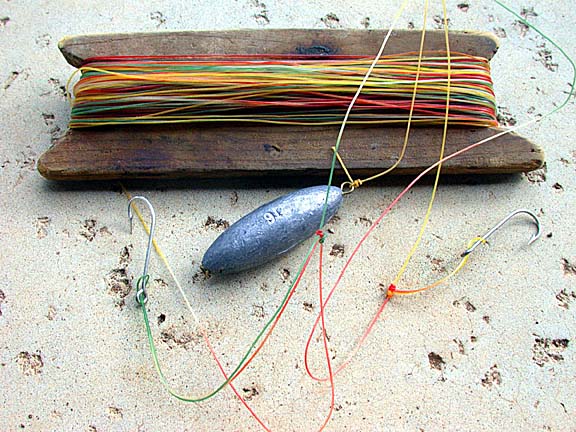
Hand line may be defined as the simplest form of hook and line gearconsisting of a hand held single line weighted and with one or more hooks spacedalong the far end of the line. Hand lines are popularly known as Choonda orkaichoonda and are operated in all types of water bodies.  Length of the line also varies from 2 to 50 m, depending on the depth of operation. Hand lines can be operated very easily. Fishermen operate lines from shore, canoe or any elevated platforms like bridges and dams. They are dropped into the water at places where the fishes are expected and fishermen feels usually with hands when fish bites. Baited lines having a length of  20-30 m.
hand line

LONG LINES

Long lines can be classified by how they are fished: 
Set long lines: stationary lines that are anchored to the vessel, the seafloor or to an anchored buoy. 
Drift long lines: attached to floats that drift freely with the ocean currents. 

Long lines popularly known as beppe is operated in all places for fish and eel.  Mainline is 200-800 m long and is made of Polypropylene twine of 2 to 3 mm diameter or Poly amide monofilament of l to1.2 mm diameter. Generally round barbed hook of size ranging from number 8-12 are used depending on the target species. Prawns and cut pieces of fish are used as bait.Pelagic species targeted by drift long lines include Tunas, Sharks and Swordfish. Demersal species targeted by set long lines include Cod and Halibut. Long lining is considered one of the most fuel-efficient methods of commercial fishing. 


VERTICAL LINES

In enclosed water bodies the fishing lines can be allowed to drift freely attached to a float. lt can be a tackle with a single hook or a vertical or horizontal long line with several hooks. A kind of vertical line, popularly known as kenichi, is operated in weed infested canals and fields of Alappuzha, Kerala.
Jigger lines are a specialized type of vertical line, fitted with specialized ripped hooks, used primarily in Squid fisheries. Multiple hooks are evenly spaced along the main line, which is hauled in using jerky vertical movements. This movement simulates the realistic movement of common prey species of the targeted species. 

TROLLING LINES 

Trolling lines are lines with baited hooks that are dragged behind trollers as well as other types of vessels. Trolling speeds vary depending on the target species, but generally are between 2.6-8.1 mph. 
A single line or multiple lines may be connected to outriggers that extend from both sides of the boat.
 Targeted species vary in size from small fish like Mackerel to large pelagic species of tuna. 

POLE AND LINE

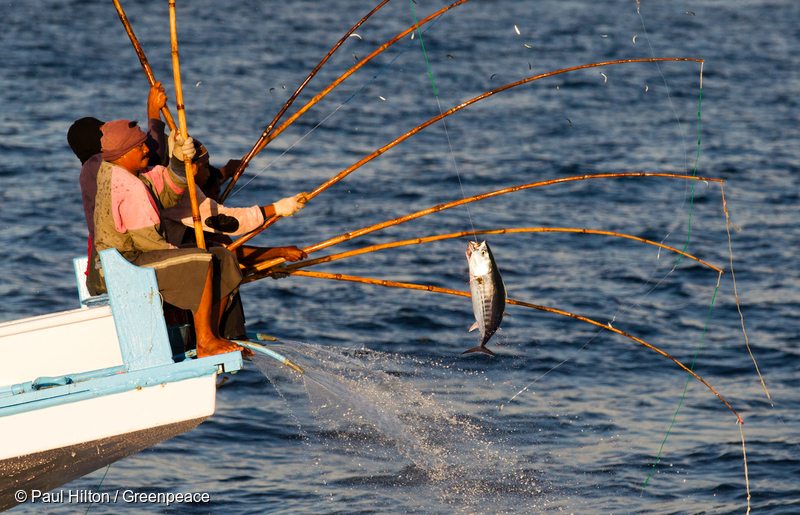
Pole and line consists of a hook and line attached to a pole. If the line is much longer than the rod it is wound around a reel. Both artificial and natural fish are used to lure the prey. Poles are commonly made out of wood or fiberglass and can be operated by hand or mechanized. Tuna species are commonly caught by the pole and line method in commercial fisheries of Lakshadweep. Pole and line fishing can occur from the surface to great depths, the only limiting factor is the amount of line used.

MULTIPLE HOOK AND LINES

Lines with multiple hooks, a type of jigging line with 20 to 30 branches on one end. The main line is made of PA monofilament having 1.2-1.4 mm dia. and about 80 m length. 20-30 branches each  having a hook. Length of the branch line is about 10 cm and it is tied to the main line at 10-15 cm intervals. A lead piece weighing 150-200 g is attached to the end of the line to keep the line under the current. This type of lines without bait is dropped from the dam and it is continuously pulled and released. 

Thursday, 8 November 2018

CULTURE AND SEED PRODUCTION OF CRABS

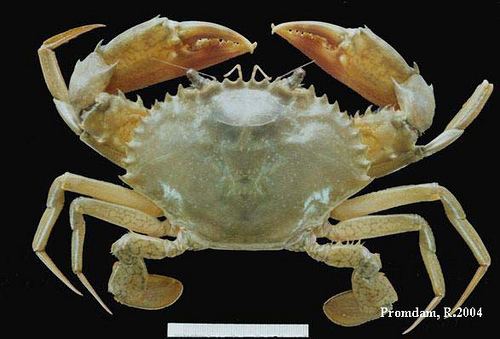
Among the marine edible crustaceans, crabs, rank third by virtue of their delicacy and demand for human consumption. In India, 600 hundred species of crabs are available, of which only two species are used to the culture. (Scylla serreta and Scylla tranquebarica). S. serreta is smaller and S. tranquebarica are larger species. Scylla species are generally known as mud crabs or green crabs.
 In malayalam they are known as “patcha njandu,kuzhi njandu and kattu njandu”.

Scylla serreta


S. tranquebarica can be easily distinguished from S.serrata by polygonal marking on the carapace.
 Among the marine crabs, mud crabs are the only species which can remain alive out of water for a considerable period of time. In earlier periods crabs are cultivated along with milkfish, but later on great demand, the monoculture is practiced. Major markets for Indian live mud crabs are in Singapore, Malasia, Taiwan, Hong Kong, and China. Hatchery production technology of mud crabs is presently available in Philipines, Indonesia, China and in India.
Scylla tranquebarica


TAXONAMICAL  POSITION OF MUD CRABS

Phylum: Arthropod
Class: Crustaceans
Order: Decapods
Family: Portunidae
Genus: Scylla
Species: serrata

Parts of a mud crab

HABITAT OF MUD CRABS

Adult crabs are found both in marine and estuarine waters. Mud crabs possess a pair of paddle-shaped swimming legs, which help them for fast swimming. Mud crabs in their megalopa stage enter in estuaries, coastal lagoons, and backwaters, grow fast, attain maturity and become berried. For hatching of the larvae, the berried female migrates into the sea waters. They bury under the sandy bottom. These are common among the mangrove forest.

FEEDING

Crabs generally feed on crustaceans, mollusk, small fish, detritus, and plants.But in culture, 18˚c frozen fishes are given as feed, after thawing the feed is given for crabs. 

IDENTIFICATION OF SEX

The immature and mature males of mud crabs have a slender and triangular shaped abdominal flap on the ventral side of the body. The immature females have a broad and triangular shaped abdominal flap. matured females have a semicircular shaped abdominal flap. The male crabs normally grow faster than females and attain bigger size than the females. Based on the gonadal development, 5 stages of maturity are recorded i.e., immature, maturing, late mature, fully mature and spent.
Male and Female abdominal flap

LIFE CYCLE

Mating occurs soon after moulting of a matured female. The male inserts spermatophores into the spermatheca. When the egg matures, it passes through spermatheca where fertilization takes place internally. The fertilized eggs are shed out through the opening of the vulvae and spawning event takes place. The spawned eggs are placed at the abdominal flap of female crab with the help of ciliary action of pleopods. Generally, the crabs spawn near the seawater lagoons, bays and coastal areas. Scylla serata prefers salinity in the range of 28-35 ppt for spawning.

The life cycle of the mud crab is divided into two phases; 

Early post-larval stage and grow out stage.
The eggs hatches into Zoea, which pass through various stages (zoea; 1-5) metamorphose into megalopa and migrate to brackish water areas.Then they enter into the crab instar stage and the entire process takings a total period of 25 days. It continues to grow to become juvenile, sub-adult until it attains adult stage. Upon attaining maturity and mating they migrate to sea for spawning.

Fecundity

The number of eggs found attached to the pleopods of female mud crabs varied from 0.3 to5 million. Breeding season is throughout the year.

SEED PRODUCTION OF MUD CRABS

SELECTION OF BROOD STOCK FROM WILD:

Healthy broodstock is collected from wild, for the immediate breeding programme, only mature female or berried female is collected from wild.
  1. Brood must have; 
  2. hard exoskeleton,
  3.It should be free from all pathogens,
  4 all the appendages are to be intact, 
  5 no damages on the body. 
Berried female

TRANSPORTATION OF BROOD:

After the collection of berried female, chelipeds are tied with jute fiber or banana fiber. 
Then they are to be kept in the bamboo basket filled with wet seaweeds /cotton wool/paddy straw/mangrove twigs. Finally, the basket should be covered with wet jute cloth with proper ventilation. In case of berried females, the animal has to be brought in wet condition from the collection point and kept individually in the thermocol container. The chelipeds need not be tied with ropes because it may damage the eggs.

ACCLIMATISATION: 

Once the broodstocks are brought to the hatchery, the animals are carefully removed from the transport container to allow them in an empty basin. Then clean sea water is to be added slowly for acclimatization or it is advised to acclimatize them in clean water at collection point itself in order to maintain fertilized eggs in a healthy condition

QUARANTINE SECTION: 

For removing the pathogens the animals are treated with formalin @150 ppm dosage for 30 minutes.

STOCKING: 

After acclimatization and quarantine section the berried crabs are directly stocked into the black colored FRP spawning tanks of 250-300 liters capacity. Covered with a lid and filled with cleaned and disinfected sea water with aeration. Black tanks are always preferred and should be kept in a spawning room with individual spawner.

WATER QUALITY MANAGEMENT:

Salinity-28-32ppt
pH - 7.5-8.5
Temperature – 28 - 32⁰C
Dissolved oxygen - > 4.0 mg/liter

BROODSTOCK FEED:

Fresh fish, squids, bivalves, mussels etc are given as food. 
The mature broodstock can be fed with 5-10% of body weight (40% in morning and 60% in evening).
 The frozen fishes are thawed first before feeding.

INDUCED BREEDING:

 In crabs, gonadal maturation can be induced by eyestalk ablation. During this process, one of the eyes is ablated to remove gonad-inhibiting hormone-secreting gland situated in the eyestalk. 
Ablated eyestalk has to be treated with iodine ointment for healing the wound and preventing the infection. Spawning would take place between 2 and 8 weeks depending upon the ovarian development.

LARVAL DEVELOPMENT: 

The eggs hatch into Zoea. It has five stages (Zoea 1, 2 3, 4, 5). After hatching of eggs the spawner is shifted into another tank. Before collecting the larvae, the aeration is switched off and the incubation tank is covered with a lid, leaving a small opening. Since the larvae are photo-tactic in nature an electric light is kept near the opening of the lid in the corner to attract the larvae. The accumulated larvae are collected by fry bowl or using siphon net. The collected larvae are transferred into larval tanks. Rearing of larvae is continued in the same tank till it reaches the Zoea – 5 stages. (stocking density 70 numbers/liter).Once the larvae cross zoea 5 sage, its metamorphosis into megalopa stage. (Stocking density 1-2 no./liter). To avoid cannibalism certain hideouts are provided.
Temperature 25-32⁰C, Ph-7.5-8.5 and DO- >4mg/liter are provided for larval tanks

FEED FOR LARVAE: 

For early zoea stages, rotifers (Brachionus plicatilis) are given as feed. After 7 days rotifer with microalgae is provided. Day 8 onwards artemia are given as feed. As an alternative, egg custard, fish meat, squid meat etc., can be given. Megalopa develops into crab instar, and then it develops into sub-adult and adult.

NURSERY REARING:

Hatchery produced crab instars 0.3-0.5cm carapace width are stocked in HPDP Happas in brackish water ponds. Where the salinity range is 15-35ppt. Hideout is provided to avoid cannibalism. The minced fish meal can be given as food. Based on the feeding and management nursery days may vary from 30-40 days to attain the “matchbox” crab let.


CULTURE OF CRABS:

Nursery-reared crablets are used to grow out culture. Normally 6-7 months are required to attain a marketable size of average 500 gms. Another way used to grow out culture is growing of juveniles sizes in small brackish water pond for two months to attain the average size of 50-60gms. 
 The size of the grow out pond can vary from 0.25-1 Ha, with proper inlet and outlet water management. Soil texture with a high slit is not suitable for crab farming. Minimum 1-meter water depth is required. Stocking density 1 juvenile crab/m². Stocking density 1 juvenile crab/m². Stocking of crablets can yield an average survival of 60% and stocking of juveniles yield 80% survival rate.

PEN CULTURE: Crablets can also be cultured in pens with average stocking density is 1no/m². The advantage of pen culture is easy growth, faculitate stocking of different sizes of crabs in different pens which may ultimately increase the survival and yield. Crabs generally feed on mollusks, fish, other crustaceans and annelids.


Monday, 21 May 2018

SEAURCHIN - CULTURE

Sea urchins or urchins are commonly called sea hedgehogs and are small, spiny, globular animals that, with their close kin, such as sand dollars, constitute the class Echinoidea of the echinodermata phylum. About 950 species of echinoids inhabit all oceans from the intertidal to 5000 m deep. Sea urchins will be harvested once they reached 7-9 cm. Depending on market considerations

Sea urchins, locally known as “swaki, santol-santolan, maritangtang, are invertebrates that look like a ball of spines which feed on sea grasses and seaweeds particularly Sargassum sp. or Aragan.
Sea urchins can grow up to 7-9 cm with an average weight of 1 pound. They are usually found in colder off-shore water. Sea urchins are harvested mainly for their internal roe or gonads known locally as “alige or bugi”. Stomopneustes variolaris, Toxopneustes pileolus, Temnopleurus toreumaticus are common species used for aquaculture. 

Phylum : Echinodermata
Subphylum : Eleutherozoa
Class : Echinoidea

 Echinus is a benthonic animal found abundantly in the coastal waters. It prefers areas with rocky bottom. The body is globular or hemispherical in shape and thickly   covered with cylindrical movable spines. The oral and aboral surface are distinct. The body does not possess arms.


Mouth is situated at the Centre of  the oral surface and the aboral surface bears the anus.  Sea urchin possess a unique and complicated masticatory apparatus, called ‘ Aristotle’s latern ‘. Sea urchins are omnivorous and feed mainly on marine weeds and algae with the help of this scraping organ. Sea urchins are gonochoric, and the majority display no sexual dimorphism. Reproduction is sexual and fertilization is external. The development involves a free swimming echinopluteus larva. 


Anatomy of  Seaurchin

Reproduction

 Sea urchins are dioecious, having separate male and female sexes, although distinguishing the two is not easy, except for their locations on the sea bottom.  Males generally choose elevated and exposed locations, so their milt can be broadcast by sea currents.  Females generally choose low-lying locations in sea bottom crevices, presumably so the tiny larvae can have better protection from predators. Indeed, very small sea urchins are found hiding beneath rocks.  Regular sea urchins have five gonads, lying underneath the interambulacral regions of the test, while the irregular forms have only four, with the hindmost gonad being absent. 

Development


In most cases, the female's eggs float freely in the sea, but some species hold onto them with their spines, affording them a greater degree of protection. The fertilized egg, once met with the free-floating sperm released by males, develops into a free-swimming blastula embryo in as few as 12 hours. Initially a simple ball of cells, the blastula soon transforms into a cone-shaped echinopluteus larva.  In most species, this larva has 12 elongated arms lined with bands of cilia that capture food particles and transport them to the mouth.  In a few species, the blastula contains supplies of nutrient yolk and lacks arms, since it has no need to feed. Several months are needed for the larva to complete its development, which begins with the formation of the test plates around the mouth and anus. Soon, the larva sinks to the bottom.
Sea urchin larva, called "Pluteus".

 Why Culture Sea Urchins and what is its importance???

For human consumption,  As a source of Income, Sea urchin have high demand both in local specialty restaurants and international market,  It has lucrative market in Japan, France, Korea, China and other Western countries, Culture area serves as mini reproductive reserve. 
I. Culture Technology

Cage Culture

A. Site Selection

The site should have a high water movement and tidal flushing with salinity range of 30-35 ppt. It should be sheltered from storms and bad weather. It should also be far from nearby freshwater sources such as river mouth. Sufficient water depth (at least 1- 1.5m deep at low tide.), They should also have abundant source of sea urchin food (Sargassum). Visible and easily accessible from the shore not situated along frequently used boat routes where bancas might run over the cages.
B. Cage Construction
The materials used are hard bamboo, steel bars or PVC pipes for frames covered with green polyethylene screen or net size 3/4 as enclosure. Cage dimension is 1.5m x 0.5m x 1.0m

C. Cage Installation

The constructed cages are installed on the sea floor by tying its four corners to bamboo or wooden stakes firmly driven to the sea floor. The cage should be elevated at least (1) foot above the seafloor and the top should be about 0.5 m below the seawater surface during low tide. The cage should be spaced a few feet apart to ensure sufficient water flow in the area. A marker (tall bamboo pole) should be erected to warn approaching boats of the presence of the cages.

D. Acquisition of Stocks

Sea urchin seed stocks can be gathered from the site if there is abundant supply of it. Juvenile sea urchin usually measures from 32-44 mm in equatorial diameter. Seed stocks can be gathered through simple picking. If the source of seed stock is far from the grow-out area, proper transporting procedure should be strictly followed. Live sea urchins while in transport should be kept in Styrofoam iceboxes (with aerators similar to aquariums) that contain seawater. About 500-600 urchins can be placed in one Styrofoam box. It is recommended to transport the seed stock early in the morning when the temperature is lower. Sea urchins, regardless of how they are transported, should not be abruptly transferred from the transport containers directly to the sea cages because sudden change in water conditions can further stress the urchins and may cause them to die. 
Acclimatize first the seed stocks before stocking to the cages by floating the container in the seawater in the area for a few minutes and slowly pouring the seawater into the container until the stocks can already adopt with the environment in the area.

E. Stocking

The Initial stocking density of 500 pcs per cubic meter is recommended. Thinning of the stock is done as they grow by transferring the smaller ones to another cage usually a month before harvesting. Stocking should be timed to avoid the typhoon months at harvest time. 

F. Feeding

Feeding is done once or thrice a week in “ad libitum” manner preferably with fresh Sargassum or aragan. There should be enough amount of sargassum left in the cage to ensure that urchins feed at maximum rates, grow faster, and consequently develop large gonads. When gathering sargassums for feeding, cut only the branches, and do not uproot the plant to ensure sustainability.

G. Maintenance

Maintenance includes regular monitoring of the stocks, cleaning and removing of decaying left over algae and other debris being entangled on the screen. Thinning is done to make sure that all of the stocks grow optimally. It is also necessary to guard the cages against poachers and vandals.

H. Harvesting

Sea urchins will be harvested once they reached 7-9 cm. Depending on market considerations. This will be sold live or the roe may also be processed and packed before selling. Sea urchin roe can be sold fresh, packed in brine or in the form of a paste.


Sunday, 15 April 2018

Sea bream - Mariculture


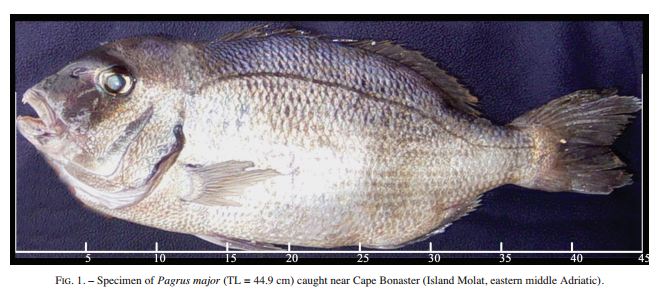
Red seabream, Pagrus major (Temminck and Schlegel, 1843) is a demersal species that occurs in the northwest Pacific (the northeastern part of the South China Sea northward towards Japan) at depths between 10 and 50 m. The red sea bream, Pagrus major (Chrysophrys major), is the most valuable marine fish in Japan. It is high-priced in Japan and used in various occasions such as wedding and festival. It is also used in some Chinese medicine. A first trial to culture it has been made at a hatchery located at Seto Inland Sea coast in 1902 (KAJIYAMA, 1937). The hatchery was soon closed because of difficulty in rearing the larvae. Since 1960, the culture of the young yellow-tail, the culture of the red sea bream did not progress until 1970. Basic research on larval production has been carried out at the universities since 1955. KASAHARA, HlRANO and OSHIMA (Japanese scientists) succeeded in rearing the larval stage of black sea bream, Mylioma aroaephalus, in 1959 (KASAHARA et al., 1960). SHlKAMA, Y~MASHITA and NISHIZUKA succeeded in rearing 22 red sea bream fry from the eggs for the first time in Japan in 1962 (YAMASHITA, 1967). These successes were achieved on an experimental scale, and therefore, further experimentation was necessary before developing mass production methods.


 In 1964, KITTAKA showed effectiveness in larval production with large scale outdoor concrete tanks. He developed a method for mixed cultures of larvae and suitable food organisms in 200 m3 tanks (HUDINAGA and KITTAKA, 1967). In 1967, NOGUCHI observed natural spawning' of cultured red sea breams in a large tank at Naruto Aquarium, Tokushima, Japan+ (NOGUCHI, 1968). Based on these successes, research has been carried out in order to find a mass rearing method for red sea bream larvae at the hatcheries belonging to Seto Inland Sea Fish Farming Association (ANONYMOUS, 1974). Most sparid species have been used in mariculture and cultivated in cages.

CLASSIFICATION AND CHARACTERS

Kingdom:     Animalia (animals)
Phylum:      Chordata (chordates)
Subphylum: Vertebrata (vertebrates)
Superclass:  Gnathostomata (jawed vertebrates)
Class:           Actinopterygii (ray-finned fishes)
Order:           Perciformes
Family:         Sparidae
Genus:          Pagrus

Species:      Pagrus major


The family Sparidae contains 35 genera and 112 species, distributed mainly in tropical and temperate waters of the Atlantic, Pacific and Indian oceans (Froese and Pauly, 2005). Eighteen of these species inhabit the Adriatic continental shelf (Jardas, 1996). Two of these belong to the genus Pagrus (Cuvier, 1816): Pagrus pagrus (Linnaeus, 1758) and Pagrus coeruleostictus (Valenciennes, 1830).
DISCRIPTION
Body robust, oblong, moderately compressed. Upper profile of head convex with a bulge above eye. Lower jaw slightly shorter then upper. Head and upper body dark violet, sides and belly silvery. Several small bright blue spots on upper sides. All spines of dorsal fin tough and not elongated. Caudal fin forked with pointed lobes. Scales moderately large, absent from bases of soft dorsal and anal fins. Posterior margin of caudal fin black, lower margin white.
 Dorsal spines (total): 12; Dorsal soft rays (total): 10; Anal spines: 3; Anal soft rays: 8. Body with many bluish dots when fresh. Shallow body, body depth 2 or more in SL. Transverse scales 6.5-7.5. All spines of dorsal fin are tough and not elongated. Posterior margin of caudal fin black, lower margin is white. Occurs from 10 to 50 m depths, often on rough grounds, but also on softer bottoms. Also inhabits reefs Adults migrate into shallower parts of their depth range to spawn in late spring and summer; juveniles occur mainly in the shallower areas. It is a popular food fish throughout its range. Feeds on benthic invertebrates, including echinoderms, worms, mollusks and crustaceans; also on fishes. The fishes are also cultivated in cages.

NATURAL DISTRIBUTION


They are mainly distributed in Northwest Pacific: northeastern part of South China Sea (Philippines excluded) northward to Japan.
Hatchery Design

The basic considerations in establishing a fish hatchery are: (i) which site is suitable, (ii) what is the area of the site and the facilities required in relation to the goals or objectives of the hatchery, and (iii) how will the hatchery be managed.
It is of primary importance to conduct a feasibility study to determine the suitability of the site. This should be done prior to the establishment of the hatchery. There are three factors which must be considered in designing a fish hatchery: (i) species, (ii) production target, and (iii) level of financial input. In addition, the facility requirements will depend on the nature of organization to run the hatchery. For government pilot projects, some laboratory support facilities are required. Otherwise, it may not be necessary as in commercial projects.
The design of the hatchery will also depend on its objectives. Experimental facilities or production-oriented system for commercial purposes or the combination of both may be incorporated in the design.

The hatchery can be an independent enterprise which is entirely self-sufficient in terms of facilities and manpower or as part of a bigger organization which utilizes its facilities and technical know-how. The hatchery can be an independent enterprise by itself or vertically integrated with other aquaculture enterprises in an organization.

 Criteria in the selection of sites for seabream hatchery

1 Seawater supply

The seawater used in a hatchery should be clean, clear and relatively free from silt. The water quality should be good with minimal fluctuation in salinity all year round. Suitable sites are usually found near sandy or rocky shore. Sites which are not suitable for hatchery include areas which are heavily influenced by rain or turbulence. River mouths should be avoided as abrupt salinity change occurs after a heavy rainfall. An added advantage of having a site on rocky shores is that good quality seawater is relatively near the shoreline. This reduces the cost of piping installation and pumping. The hatchery site should also be free from any inland water discharges containing agricultural or industrial wastes.

2. Accessibility

Ideally, a hatchery site should be selected in areas where there are active fish farming operations so that the fish larvae produced can be easily transported and distributed to the grow-out ponds and cages. The site chosen for a hatchery must have easy access to communication and transportation channels.
3. Availability of power source
A fish hatchery cannot be operated without electricity. Electricity is essential to provide the necessary power to run the equipment and other life support systems of the hatchery. Hence, the site must have a reliable source of power. Installation of a standby generator is absolutely necessary especially in areas where there are frequent and/or lengthy power failures and fluctuations.
4 Topography
The ideal site should be spacious, situated on flat to gently sloping grounds, well drained and not susceptible to floods, strong wave and tidal actions. It should also be on compact soil and accessible by paved road.
5 Acquisition
It is advisable to pay attention to land values early in the site selection phase to ensure that the site is available for purchase or lease and at a price consistent with the project budget. Since land with the above characteristics is generally also desirable for other activities, it may be competitive for alternate land usage.

Hatchery size

Hatchery design is aimed at achieving certain production targets which in turn determine the size of the hatchery. The capacity is based on an approximate ratio between tank for production of natural food (algae and rotifer) and larval rearing tank. The spawning tank depends on the larval requirement which is based on the number of spawners.

Holding tanks

The holding tanks in the seabream hatchery are used for various purposes such as for brood stock conditioning and subsequent spawning, incubation, larval rearing and production of natural food.

Seawater system

Seawater can be drawn directly from the sea or from the sump pit. If the source of water is relatively clear, the water can be pumped directly into the overhead filter tank and stored in the reservoir or storage tank. Water is then gravity-fed to various culture tanks through delivery pipes. However, if the water is turbid and contains a high concentration of suspended solids, it must be pumped first into a sedimentation tank where the suspended solids are allowed to settle down. Only the clear upper portion water is pumped into the filter tank. In some areas where water source is far from the shoreline and during low tide where large quantity of water is needed continuously, the sump pit or tube well can be constructed inshore near the hatchery. The sumps pit is connected to an underground pipe which is situated towards the water source. The water continuously enter the sump pit through the underground pipe even during low tide. Water is then pumped directly from the sump pit or tube well. Water from the sump pit or tube well is usually clear because the water is filtered naturally through a layer of sand before entering the pipe so that it can be used directly. However, if vary clear and clean water is required, it should be pumped through the filter tank before use.


 A brood stock development/spawning tanks

An incubation tank.

A larval rearing tank.

SPAWNING AND HATCHING.
Maturation
The red sea breams used for spawning are kept in net cages or concrete tanks
(Dimensions: 10-20 m x 10 m x 5 m), for about a year or two depending on their initial ages. The red sea bream becomes sexually mature when 3 years old. Its feeding activity is dependent on temperature. Breeders are cultured in the southern part of Japan during winter. The spawning season extends from April to June, with a peak in early May.

Brood stock development

There are two sources of seabream brood stock: wild-caught adults and from ponds/cages (2–6 years old fishes averaging in weight from 3 to 5 kg). It is advantageous to use pond or cage-reared brood stock as they are already used to culture conditions being easier to condition and develop them into broodfish. However, when 2–3 year old cultured stocks are not available, wild-caught adults can be used, but they must be first acclimatized under cage or pond condition for at least 6 months before being used as spawners.

1. Wild brood stock collection

The fishery worker must constantly strive to minimize stress in handling captive brood stock. Efforts to capture seabream should be confined to areas where they are known to occur. The selection of a suitable gear or method of capture must also be considered. Unless the fish are abundant in an area, the effort and cost required for capturing fish will become astronomical.

2. Conditioning of wild brood stock

Captured fish are placed immediately in transport tanks and taken directly to the hatchery or holding cages. Anesthetic is not necessary if the fish are shipped in live tanks or in aerated transport containers. Upon arrival at the hatchery, the fish are treated with antibiotic such as oxytetracycline. If antibiotic is applied directly into the water, absorption is effected across the gills and the skin of the fish. The recommended concentrations of antibiotics are: 2 ppm for the dripping method for 24 hours and 20 mg per 1 kilogram of fish for the injection method.
In nature, seabream is a carnivorous and feeds voraciously on live fish. However, in captivity, they can be conditioned to feed on dead fish. After recovery from initial injuries resulting from capture, seabream can be trained to feed on fresh marine fish. It often takes a few days before the fish gets used to the new diet. It is important to throw the feed piece by piece as the seabream never eat the food when it settles to the bottom of the tank. The uneaten feed should be removed to prevent water pollution.

3. Brood stock maintenance

The fish, whether cultivated or wild-caught, can be maintained as brood stock in cages and concrete tanks.

(a) Cages

Floating cages are usually used for brood stock development. Cages made of polyethylene netting materials are attached to GI pipe or wooden frames kept afloat by Styrofoam drum and anchored within a calm bay or sheltered marine environment .The size of the cages varies from 10 to 100 sq.m in surface area with a depth of 2 meters (dimension: 5 × 5 × 2m or 10 × 10 × 2m). Smaller cages are more suitable because they are easier to maintain and manage (such as in changing of net and harvesting). The mesh size of a brood stock cage varies from 4–8 cm. Stocking density of fish is 1 per cubic meter of water.

(b) Concrete tanks

The size of concrete tanks used for holding brood stock depends on the size of the hatchery. It is advisable to use a bigger tank to allow the fish ample space for swimming. Generally, tank volume ranges from 100–200 tons (5 × 10 × 2m and 10 × 10 × 2m). Stocking rate in brood stock tank is 1 fish for every 2 cubic meters of water. Good water quality in brood stock tanks should be maintained. A water change of about 30–50% daily is recommended.

Spawning and fertilization

1. Selection of spawners

The selection of spawners from the brood stock should be done months before the beginning of natural spawning to allow ample time for the fish to be conditioned to environmental and diet controls. Spawners are normally selected based on the following criteria:
  • fish should be active
  • fins and scales should be complete
  • free from disease and parasite
  • free from injury or wounds
  • males and females of similar size groups are preferred
  • spawner should be at least 4–5 kg in body weight and should not be less than 3 years old
Selected spawners are then transferred to the pre-spawning tank. The ratio of male and female stocked in the pre-spawning tank is 1:1.

2 Care of spawners in pre-spawning tank

Immediately after stocking in the pre-spawning tank, the feeding is reduced from 5% to 1% of the total body weight and fed once a day. This is to prevent the fish from getting fat which can result in poor gonadal development. The feed given should be fresh marine fishes such as sardine, yellow stripe thread fin, etc.
Water in the spawning tank should be maintained in good condition. This can be achieved by changing the water about 50–60% daily.
 Spawning of seabream
Presently, there are two major techniques employed in mass production of seabream fry in Southeast Asian countries: artificial fertilization and induced spawning.

1 Artificial fertilization.

Spawners are caught in natural spawning grounds near the mouth of the river or in salt water lakes, where the water depth is about 10–20m. Gill net and seine net are commonly used. Normally, the fishermen will net the fish during spring tide 2–3 days before the new moon or full moon until 5–6 days after the new moon or full moon at about 1800–2200 hours, at the time of the rising tide.
The degree of maturity of the collected spawners should be immediately checked. If the female has ripe eggs and the male is in the running stage, stripping is done in the boat. The fertilized eggs can then be transported to the hatchery for subsequent hatching. In cases where only the male is caught, the milt is collected by stripping into a dry glass container. Milt is then stored in an ice box or refrigerator. The milt can maintain its viability after a week in cold storage (5–15°C). The preserved milt should be made available for immediate use when a ripe female is caught.
The dry method of fertilization is normally used in this case. The eggs are stripped directly from the female to a dry and clean container where the milt is added. A feather is used in mixing the milt and eggs for about 5 minutes. Filtered seawater is then added into the mixture while stirring it and then allowed to stand undisturbed for 5 minutes.
2. Induced spawning
Two methods are normally used for inducing seabream to spawn in captivity, e.g. hormonal injection and environmental manipulation. Both methods would induce the fish to spawn naturally in the tank. This results in a monthly spawning until the gonads are spent.
2.1, Induced spawning by hormone injection
After stocking seabream brood stock in the pre-spawning tank for two months, the fish are inspected twice a month during spring tide, ovarian maturity of the female is measured as follows: the eggs are sampled from the female through the use of a polyethylene cannula of 1.2 mm in diameter. The fish is either anaesthetized or inverted gently with a black hood over the head. The cannula is inserted into the oviduct for a distance of 6–7- cm from the cloaca. Eggs are sucked orally into the tube by the operator as the cannula is withdrawn. The eggs are then removed from the cannula and egg diameter measurement is made. When the seabream eggs reach the tertiary yolk globule stage or have a diameter of 0.4–0.5 mm, the female is ready for hormone injection. In males, only those with running milt are chosen.
The hormones usually used to induce spawning in seabream that produce reliable results are:
  • Puberogen
  • HCG + pituitary gland of Chinese carp
Puberogen consists of 63% follicle stimulating hormone (FSH) and 34% Leutinizing hormone (LH). The dosage usually applied is 50–200 IU/kg of fish. The fish will spawn at about 36 hours after injection. If no spawning occurs, the second injection is applied 48 hours after the first injection. The dosages of second injection should be double from that of the first injection and can also be given 24 hours after the initial injection. The male is usually injected at the same time as the female with a dosage of 20–50 IU/kg of fish. The fish will normally spawn within 12–15 hours after the second injection.
Homogenized pituitary glands of Chinese carp are used at 2–3 mg/kg of fish mixed with Human Chorionic Gonadotropin (HCG) at 250–1,000 IU/kg of fish. The time interval of application and spawning are the same when using puberogen .
Before injection, the spawner should be weighed and the hormone requirement computed. Spawners should be injected intramuscularly below the dorsal fin. After injection, they should be transferred from pre-spawning tank to the spawning tank. Twenty four hours after first injection, response of the fish to the hormone treatment is often manifested by the swelling of the belly. If the fish is expected to spawn within the next 12–15 hours, a milky white scum (fatty in texture) will appear on the water surface of the spawning tank. If not, a second injection should be given.
Seabream that are induced to spawn by hormone treatment will always spawn within 12 hours after the second injection. The schedule of injections for subsequent spawning must be synchronized with the natural spawning time of the fish which occurs in late evening between 1800 to 2000 hours.

2.2 Induced spawning by environmental manipulation

Based on field observations and analysis of natural phenomena that occur during spawning period of seabream, techniques were developed to stimulate the fish to spawn in captivity. The following steps are necessary:
  • changing the water salinity to simulate fish migration
  • decreasing the water temperature to simulate the decreased water temperature after rain
  • lowering and subsequent addition of fresh seawater to the tank in order to simulate the rising tide, and
  • Follow the moon phase.
Initially, the salinity of water in pre-spawning tank is prepared at 20–25 ppt before stocking the selected spawners. After stocking, 50–60% of water is changed daily until 30–32 ppt is reached. This will take about 2 weeks. This will simulate the migration of fish from its growing grounds to the spawning grounds.
Constant monitoring of fish is required to detect pre-spawning behavior. When the fish is observed to display its silver belly, this is an indication that it is ready to spawn.
The female fish separate from the school and cease to feed one week prior to spawning. Two or three days before the new moon or full moon, as the female approaches full maturity, there is an increase in play activity. The ripe male and female swim together more frequently near the surface as spawning time approaches.
At the beginning of the new moon or full moon, the water temperature in the spawning tank is manipulated by reducing the water level in the tank to 30 cm deep at noon time and exposing to the sun for 2–3 hours. This procedure increases water temperature in the spawning tank to 31–32°C. Filtered seawater is then rapidly added to the tank to simulate the rising tide. In effect, the water temperature is drastically decreased to 27–28°C.
The fish spawn immediately the night after manipulation (1800–2000 hours) or if no spawning occurs, manipulation is repeated for 2–3 more days, until spawning is achieved.
Whether the fish is induced by hormone treatment or environmentally manipulated to spawn, they would continue to spawn for 3–5 days after the first spawning provided the environmental factors that stimulate spawning are present, e.g. new or full moon, changes in salinity and temperature, etc. Since seabream spawn intermittently (by batch), the same spawner will continue to spawn during full moon or new moon for the next 5 to 6 months.

Egg collection and incubation

Fertilized eggs of seabream range in size from 0.8–1 mm. They float in the water column (pelagic) and are very transparent.
Eggs in spawning tank can be collected and transferred to incubation tanks by either of the following procedures:
a.     The spawning tanks are supplied with continuous flow of seawater. The overflowing water carry the eggs into a small tank (2 × 0.4 × 0.3 m) containing a plankton net (200μ mesh). This is usually set in the afternoon. Seawater should start to flow after the fish have spawned. Eggs are collected and transferred to larval rearing tanks the following morning.
b.     The eggs are collected from the spawning tanks using a fine mesh (200μ) seine net the morning after spawning.
The collected eggs should be washed repeatedly through a series of filter screens to remove debris (organic detritus, plankton, etc.) that have adhered to the eggs. The eggs are then placed in graduated cylinders for density estimation. Normally, fertilized eggs float while the unfertilized eggs settle to the bottom of the container. Unfertilized eggs are later removed by siphoning.
Fertilized eggs are then transferred to incubation tank at the density of 100 eggs/liter. The eggs will hatch at about 17–18 hours at 26–28°C after spawning. Dead eggs which settled at the bottom are removed by siphoning. The newly-hatched larvae are carefully collected the following morning by scooping them with a beaker and immediately transferred to larval rearing tanks.
Hatching rate of seabream eggs by environmental and hormonal manipulation ranges between 40–85% and 0.1–85%, respectively.
Larval rearing
The rearing tanks are commonly fabricated from plastic, fiberglass, wood or concrete. A typical larval rearing tank is rectangular in shape and located outdoor. Its volume ranges from 8–10 tons (7 × 1.2 × 1m or 10 × 1.5 × 1m). The tanks are usually protected from strong sunshine and heavy rains by a roof tile cover. The usual stocking density for newly-hatched larvae in rearing tank is between 50–100 larvae/liter.


Egg collection

 Egg collecting by seine net.

REARING THE LARVAE

Prelarval stage
The newly hatched larvae are introduced into floating tanks (dimensions: about
2-4 m x 2-4 m x 1.5-2 m) made of synthetic fiber cloths. The floating tanks are hanged in a large concrete tank (water volume: 50-200 m3). The survival rates of pre larvae are improved in tanks with abundant propagation of uni-cellular green algae. In order to promote the propagation of uni-cellular green algae, small amounts of inorganic and organic nutrients are added into the floating tank. The optimum density of uni-cellular green algae is about 300,000 cells/ml. Slight aeration is provided by about 8 vinyl hoses (diameter: 5 mm) per floating tank.

The pre larvae are released into large concrete tanks after they have been reared for about 10 days in the floating tanks. Fertilization is also necessary in most cases.
However, in case of remarkably dense propagation of uni-cellular green algae, the illumination is reduced by covering the top of the tanks and water is exchanged for fresh sea water. Aeration is provided by about 30 vinyl hoses per concrete tank. The daily rate of water renewal is set to 1/4 of the total volume several days before transferring the larvae to another rearing net cage. Waste accumulated on the bottom is removed by siphoning. The newly hatched larvae live for the initial 3 days on their yolk sac. The actual feeding begins on the 4th day after hatching, when the yolk sac is resorbed and the digestive organ is formed. Oyster eggs, rotifers (Braahionus pliaatilis), copepods collected by net, and nauplius of Artemia salina are used for feeding individuals in pre larval stage. The food value of copepods and Artemia was compared. Survival rate of larvae during the period from 23rd to 34th day after hatching was 50 % with copepods and 15 % with Artemia. Thus copepods seem to be a better food than Artemia. However the species and amount of copepods vary depending on location and season. It will be necessary to establish mass culture method of copepods. Maximum initial density of pre larvae was 25000/m3 while the density at harvest was 2000/m3.Average survival rate at pre larval stage was 10 % Pre larvae hatch at 2.0-2.3 mm total length. They grow to about 6 mm total length in 20days.
POST LARVAL STAGE
Post larvae of red sea bream (about 6 mm in total length) are transferred into net cages installed at sea. The water depth of the large concrete tanks is decreased to 1/3 (water volume: 50 m3) before gathering the larvae in order to avoid injury due to water current. A hose (diameter: 5 cm) is connected to the drain. The water flow of the drain is regulated to about 3-5 m3 per hour. Gathering is done from the evening to midnight. The mortality during transfer is about 10 %. It is higher for smaller size post larvae. However the post larvae begin to swim against the water current when 10 mm total length and mortality increases again at this stage. Therefore it is recommendable to transfer the post larvae when 10mm total length.
Four.net cages (dimensions: 3. x 3 m x 2 m) are hanged per raft (dimensions:
8. X 8 m). Mesh of the net is 0.16 cm. The nets are cleaned every 2-3 days and replaced every 5 to 10 days. Post larvae are cultured to fry stage (20-30 mm total length) in the net cages for about l0-40days. Initial density of post larvae in the net cages is about 2.000/m3. The number of fry harvested is about 400-500/m3. Survival rate during net cage stage is about 30 %. Survival rate of fry from hatching to 20 mm total length is about 3 %.  Feeding with Braohionus plieatilis and Artemia salina is preferable at the early stage of the net cages. But the main feed used during the net cage stage is trash shrimp and fish flesh.
LARGE SCALE PRODUCTION METHOD

As long as the scale and the method of producing red sea bream larvae are limited to the above mentioned level, the mass production of larvae in the true sense will be difficult to achieve. It was considered that the larvae of red sea bream are sensitive to the change of the environmental conditions. Therefore, rearing of the larvae was carried out in outdoor tanks using filtered sea water. However, many experiments have shown that the larvae can be reared successfully in outdoor tanks using regular sea water.
An interesting experiment was carried out in an outdoor pond at Tamano in 1973.
Post larvae of red sea bream of total length 6-8 mm were released into a nursery pond (area about 500 m2, volume: 400 m3, and depth: about 0.8 m). Prior to the release, fertilization was applied with about 100 kg chicken manure and 30 kg soy sauce waste. Zooplankton, such as copepods, brachyuran larvae, ostracoda, polychaeta larvae and Gammarus were propagated into the pond. In order to avoid a temperature increase, water was exchanged at rates of 1/8oftotal volume daily and 1/4 nightly. The initial number of post larvae released into the pond was
25,800. After 25 days, 4,013 fry were harvested. Survival rate was 16 %. The average total length of the larvae, at the beginning and at harvest was 8.5and 44.5 mm, respectively. Although the survival rate was not so much improved, the growth rate was much better than with net cages.
At present, several thousands of m2 ponds are constructed with dikes in former salt fields, and the newly hatched larvae are released directly into the, ponds, whose water is fertilized. The larvae grow to a size of 20 mm total length in about 35 days. By using this method, it becomes possible to produce several hundred thousands of fry per pond per operation.
The factors affecting the hatching rate
                
Water temperature:
The fertilized eggs cease to develop at morula stage at 10° C. The hatching rate
Becomes poorer and mortality increases at 25° C. The optimum incubation temperature ranges from 15.0 to 17.5° C.
Specific gravity:
The fertilized eggs float at the water surface when its specific gravity is higher than 1.023. They sink under the middle layer when the specific gravity is lower thanl.023. The hatching rate is 80-98 % for the former case and 20-50 % for the latter. In the latter case, the larvae become abnormal and die.
Turbidity due to mud:
The effect on the hatching rates of 50 ppm silt in the water is not detectable.
However a decrease in hatching rates' is noticeable at l00 ppm.
Mechanical shocks:
It is important to avoid mechanical shocks such as disturbance and vibration, as much as possible, when gathering and transferring the eggs, Aeration is also unsuitable, unless supply is slight.


CONCLUSION
Red seabream, Pagrus major (Temminck and Schlegel, 1843) is a demersal species that occurs in the northwest Pacific (the northeastern part of the South China Sea northward towards Japan) at depths between 10 and 50 m. The red sea bream, Pagrus major (Chrysophrys major), is one of the most valuable marine fish in Japan. This is one of the fish used in aquaculture, and in India its aquaculture practice is not much developed. The seeds producing in artificial way is to be more difficult because of its less survival capacity. But in artificial way also seed produced, that is by induced method and environmental manipulation.


·         


Featured post

PEARL FARMING - THE GOLD FARMING

Pearls have been known to mankind since the beginning of civilization.  These structures are secreted by the mantle (i.e., the skin) o...

Popular Posts