Translate

Wednesday, 29 April 2020

PEARL FARMING - THE GOLD FARMING


Pearls have been known to mankind since the beginning of civilization. These structures are secreted by the mantle (i.e., the skin) of pearl oysters in response to irritations caused by external or internal stimuli such as sand grains, molluscs eggs, parasites, detritus, and other foreign particles. India has one of the highest demand for pearls for setting in jewellry, and is particularly famous for its pearl oyster resources which yield superb pearls. The pearl oyster fisheries are located in two main areas: 1) in the Gulf of Mannar off Tuticorin coast and 2) in the Gulf of Kutch on the northwest coast of the country. Pinctada fucata, pinctada vulgarisare the two important species & are commetrcially important  source of “ornamental pearls”.

BIOLOGY OF PEARL OYSTER

1. Food and feeding habits

Like other bivalves, the pearl oyster is a filter feeder.Unicellular organisms including infusorians, foraminifers and radiolarians have been found in the stomach of pearl oyster. Minute embryos and larvae of various organisms, algal filaments, spicules of alcyonarians and sponges were also observed.

2. Reproduction 
In pearl oysters, the sexes are separate although hermaphrodite conditions have been observed in some individuals. Change of sex takes place in some oyster towards the end of spawning.
 Based on the external appearance, microscopic examination of smears and histological studies, five developmental stages have been distinguished in the gonads of P. fucata off Tuticorin coast.

Stage 1: Inactive/spent/resting

The gonad is completely shrunken and translucent. In some cases it is pale orange in colour. Large vacuolated yellow (fat) cells are seen in the interfollicular spaces. The sex at this stage can hardly be distinguished.

 Stage 2: Developing/maturing

The transparent nature of the resting gonad is lost and it becomes distinguished from other visceral masses. Gametogenic materials begin to appear in the gonad. As the stage advances, the gonad begins to branch along the posterior side of the retractor muscle and advances to the anterio-dorsal region. The gametes begin to proliferate along the follicle wall. In advanced stages, the inter-follicular spaces become reduced and the lumen of the follicle may contain some free oocytes.  The majority of the oocytes are irregular in shape and the germinal vesicle (nucleus) is not distinctly seen. The average size of the oocytes is 60.0 × 47.5 μm and the germinal vesicle, if present, is 20.0 μm.

Stage 3: Mature

The gonad spreads on to most of the visceral tissues. It is mostly yellowish cream. The lumen of the follicle is filled with free oocytes. Some of them are attached to the follicular wall by means of slender stalks. The majority of the oocytes are pyriform in shape. The average size of the oocyte is 68.0 x 50 μm with a well defined germinal vesicle. The mean diameter of the nucleus is 25 μm.

Stage 4: Partially spawned    


The gonads become loose in consistency and the visceral epithelium becomes dull. The follicles shrink with the reduction of gametes in the lumen. The oocytes are free and found along the follicular wall. Most of the oocytes are spherical and nucleated. The average size of the oocyte is 51.7 μm.

Stage 5: Spent

The gonads shrink further with a few left over gametes in the lumen of the follicles. Ruptured follicles are seen in some cases and the lumen sometimes contains ruptured cells. Oocytes, if present are few and spherical. The average size of the oocytes is 54.4 μm. The description of the spent stages applies to the oysters which have recently undergone oogenesis. Otherwise they transform to the spent resting stage quickly.Males show the same pattern of reproductive activity. However, in stages 2 and 3, the colour of the gonad is pale cream. In other stages of gametogenesis, the gonads of males and females appear similar when observed externally.


HATCHERY TECHNIQUES FOR SEED PRODUCTION

 Artificially reared spat

 Seed of P. fucata, were produced in 1981 in the laboratory through hatchery techniques at the Central Marine Fisheries Research Institute at Tuticorin.

   Hatchery building

The roof of the hatchery building is sufficiently high to avoid high temperature. 
Part of the roof of the wet laboratory has translucent fibreglass sheets to allow sufficient light for indoor phytoplankton culture.Glass panelled large windows and ventilators are provided for free passage of light and air. The concrete floor has sufficient gradient facilities for easy drainage.

 Seawater management


The seawater is usually drawn from the sea beyond the low water mark into a well through PVC pipes. The seawater is pumped to sedimentation tanks and passed onto the biological filter which contains coarse river sand at the top, pebbles below it and charcoal at the bottom. The filtered seawater is stored in a water sump and lifted to an overhead tank for supply to the hatchery. Periodic cleaning of the filter bed keeps the seawater uncontaminated.  PVC, fibreglass and stainless steel materials are used in the hatchery. The seawater sterilized by ultraviolet irradiation is used only in specific cases.  

Aeration

  Air compressors with storage tank are used to aerate seawater in the rearing tanks. The compressed air is passed through a series of filters to remove oil and moisture and is supplied to the various culture vessels through PVC pipes. The air is supplied to the tanks through diffuser stones.

Live food production- Phytoplankton

Flagellates measuring less than 10 μm form the main food for pearl oyster larvae. Isochrysis galbana is an important algal food for the larvae. Other microalgal cells such as Pavlova, Chromulina and Dicrateria are also suitable for the larvae. 

Broodstock maintenance

Oyster broodstock are maintained at a water temperature ranging from 25–28 °C in a controlled room. They are fed with a mixed algal diet at a ration of 4 l per oyster/day. The algal food is supplemented by raw corn flour at 30 mg per oyster/day. Pearl oysters with maturing gonad fed with the above food for 45 days will spawn with a 30 % response. The matured oysters can be kept for a prolonged period at 25–28 °C, while spawning of these oysters can be stimulated by raising the water temperature by few degrees.

Spawning

Spawning of natural oysters with mature gonads occurs when there is a simple change in the seawater environment or a mechanical shock by shell cleaning or a change in water pressure. In all cases males spawn first and this induces the females to spawn within 30 minutes.
 In the absence of natural spawning the technique of induce spawning is employed. In this technique thermal stimulation is adopted predominantly by gradually increasing the water temperature by several degrees (from 28.5 °C to 35.0 °C).Spawning of pearl oysters can also be effected by chemical stimulation. Different concentrations (1.532, 3.064 and 6.128 millimolars) of hydrogen peroxide in combination either with normal seawater or alkaline seawater (pH 9.1) is used in inducing spawning. Different pH media (8.5, 9.0, 9.5 and 10.0) are prepared either using Tris buffer or Sodium hydroxide pellets (NaOH) and the pearl oysters are induced to spawn.

Fertilization

When the eggs are released in the medium, they are pyriform in shape measuring 73.9 μm along the long axis and 45.2 μm in width. The yolk cytoplasm is heavily granulated and opaque. The egg is enclosed in a vitelline membrane and a large germinal vesicle is seen at the centre. Fertilization takes place externally in the water medium. Following fertilization, the pyriform eggs assume a spherical shape with the breakdown of the germinal vesicle. 

LIFE CYCLE OF PEARL OYSTER

 LARVAE AND SPAT HANDLING

 Larval rearing conditions

Larval density plays a significant role in the growth of pearl oyster larvae. Under identical conditions the larvae show differential growth rate at different larval densities. At higher densities the growth and spatfall are poor. A culture density of two larvae per ml produces optimum growth and spatfall rates. The colour of the culture tanks also influences the setting of larvae. Spatfall is much higher in FRP black tanks than white and blue tanks. Aeration during larval rearing affects growth and spatfall. The effect of aeration is more pronounced in smaller volumes of water. However, aeration is required after the setting of the pearl oyster larvae.

Spat production

Spat production is carried out in the molluscan hatchery at Tuticorin throughout the entire year. However, during May-August the spatfall is less due to high salinity, dustfall and warm landward wind. Sudden spurt of ciliates in the culture medium is common during this period. Such problems can be overcome by good management.

 Feeding

The microalgal cell Isochrysis galbana is provided to the larva from the veliger stage onwards. The optimum ration for a larvae is 5,000 cells/day up to umbo stage. The dose is doubled from the umbo to the pediveliger stage and tripled afterwards up to settlement. For about 15 days after settlement each spat is fed with I. galbana at 50,000 cells/day. Mixed algal diet containing mostly Chaetoceros and I. galbana is given in a ratio of 1:1 in the following 15 days. Later the spat is supplied with a mixed algal diet.

Transplantation

The spat are reared in the hatchery for about two months. By then they shall have grown to 3 mm or more. They are then transferred to the farm in velon screen netcages with a mesh size of 400 μm. Mortality may occur if spat measuring less than 3 mm are transplanted. Spat growth is monitored carefully and the netcages are changed whenever necessary. The size of mesh of the rearing cages is also monitored. The oyster spat attain an average size of 40–45 mm in 12 months.

PEARL OYSTER FARMING 

SELECTION OF CULTURE SITES   

Sheltered bays are ideal locations for pearl oyster farms. They offer good protection to the culture structures such as rafts and cages. Shallow coastal waters where the sea is calm most of the year can also be considered as a suitable site.

 Environmental conditions

 Temperature

In temperate regions, the water temperature plays an important role in the biological activities of pearl oysters. In Japan, the optimum temperature for oyster growth has been found to be between 20–25 °C.A temperature below 13 °C causes hybernation. Below 6 °C, the oysters die. At temperatures above 28 °C, the oysters show exhaustion. The thickness of the pearl layers are affected by the minute changes in water temperature during the day and also vary considerably according to the season of the year.In the Gulf of Kutch, the oysters grow vigorously in winter months when the seawater temperature ranges between 23–27 °C. A slight decrease in temperature triggers spawning in oysters in the Gulf of Mannar.

 Salinity

Pearl oysters tolerate a wide range of salinity from 24–50ppt for a short duration of 2–3 days. The effect of salinity on the growth of pearl oyster has not been clearly investigated. However, it appears that pearl oysters tend to prefer high salinities. Oysters raised in such salinities produce pearls with a golden tint.

Bottom

 Gravelly bottoms are suitable for pearl oyster farming, while sandy or muddy bottoms should be avoided. Oyster growth is affected by water temperature and nutritional condition of the ground. Repeated culture on the same ground leads to some extent the deterioration of pearl quality.
 The chemical and physical state of the sea bottom is affected by the organic substances discharged from the oysters and fouling organisms. Periodic removal of such accumulated substances from the bottom of the culture grounds often increase production as well as quality.

Depth

The optimum depth for farming pearl oysters is around 15 m. At greater depths, even if the rate of nacre deposition is slower, pearls of high quality with a pinkish colouration are obtained.

 Silt load

Pearl oysters generally prefer clear waters as high turbidity levels will affect their filtration efficiency.

Water current

In strong water currents the formation of the pearl layers is usually fast, but the quality of pearls produced is affected.

 Primary productivity

The condition of a specific culture ground depends primarily on the chemical constitution of the seawater and on the species and amount of plankton present. Rich nutrients discharged by rivers into the sea are responsible for high primary productivity. The oysters probably derive their chief source of conchiolin from the nitrogen substance of the plankton.The organic matter and calcium dissolved in the seawater are directly absorbed by the food consumption cells. The calcium passes through the mantle to be deposited on the surface of the shell or pearl in the process of their formation. The presence of trace metals in small quantities influences the colour of the nacre.

SUPPLY OF PEARL OYSTERS 

In pearl oyster farming, oysters collected from the natural beds or reared from naturally collected or cultured spat are used. In the Gulf of Mannar, several pearl banks are distributed off Tuticorn at a distance of 12–15 km and at depths of 12–25 m. Pearl oysters from these beds are collected by skin and SCUBA diving.In the Gulf of Kutch, the pearl oysters are found on the intertidal flats and the population is sparse. Collection is done by hand.In Japan, oyster spat are collected by submerging bundles of cedar twigs near the water surface during the peak larval settlement season. Hyzez films and old fish nets are also commonly used as spat collectors. Spat collection attempts in India have not been successful, and this may be due to the distance of the pearl oyster beds from coastal waters. However, India has recently succeeded in producing pearl oyster seed under hatchery conditions, therby providing the industry with a more dependable source of oysters.

REARING METHODS  

 Raft culture  

Raft culture is considered to be one of the most suitable farming methods in sheltered bays.A raft of 6×5 m in size can be easily constructed and floated with 4 buoys.
 Rafts are usually constructed with logs of teak, venteak or casuarina wood, of chosen length with the bottom of about 10 cm diameter tapering to 6 cm diameter at the tip. These logs are arranged as per the requirement and lashed with coir ropes. Floats are attached to the raft to give buoyancy. The floats can be sealed empty diesel drums of 200 l capacity with fibreglass coating, mild steel barrels painted with antisaline/anticorrosive paints or FRP styrofoam floats. Rafts are moored with anchors at opposite sides with tested quality chains and their direction is decided according to the prevalent wind direction at the specific site.In the long-line culture method, spherical or cylindrical floats which are connected by horizontal synthetic rope or chain are used. The oyster cages are suspended from the ropes.
 This system is good for open sea conditions. In another method of hanging, a hole is drilled near the hinge of the pearl oyster. A small thread is put through the hole, which is then tied to a straw rope coated with tar. The straw ropes are hung from a raft.

On-bottom culture 

Sea bottoms with a granite or coral stones composition can be used for on-bottom culture.
 In the Tuticorin Harbour Basin where the breakwater has been constructed with granite stones, the protected portion of the breakwater is used for culturing mother oysters.
 1 m of water is available below the low water mark. Due to constant circulation of seawater, settlement of fouling organisms is poor and inconsistent.
 However, it has been noted that the growth of the mother oyster is slower in on-bottom culture compared to the growth of oysters cultured in raft.

Rearing containers

 Culture of mother oysters

Box cages, measuring 40×40×15 cm, are used to rear mother pearl oysters. 
The size of the mesh varies with the size of the oysters to be reared. The frames of the cages are made up of 6 mm mild steel rods, coated with anticorrosive paints or coal tar. Box-cages are useful in general mother oyster culture. To trace the history and performance of individual oysters, frame nets are used. The frames, measuring 60×40 cm each with five compartments, meshed and hinged at one end, open as a book. The oysters are arranged in rows and held in the compartments when closed. The space available in between the two frames is about 10 mm which is sufficient for the oysters to open their valves for feeding and respiration.
(A) Culture raft constructed with teak poles; (B) A FRP styrofoam buoy; (C) A mild steel buoy
(D) Oyster long-line culture system.

Juvenile rearing

Juvenile pearl oysters are reared in netcages . Synthetic fabric of velon screen bags whose sides are stretched with a steel rod in the form of a prism are used for rearing of juveniles. The mesh size of the screen depends on the size of juveniles to be reared. The mouth of the bag is tied with a synthetic twine which facilitates opening or closing when required. To provide further protection from predators the bags are placed in old nylon fish net bags. Clogging by silt and by the growth of fouling organisms can be prevented by periodical replacement of the velon screen bag which can be cleaned, sun-dried and reused. Spat of up to 2 cm in size are reared in these small netcages. Box-cages which are used for rearing mother oysters can also be used for juvenile rearing by providing an additional velon screen cover inside the cage.

PEARL FORMATION

 Natural pearl formation

The principal causative factor in pearl formation in a pearl oyster is the presence of a nucleus.
 It can be of organic or inorganic origin, such as parasites adults or larvae, molluscan eggs, decaying parts of plants, sand grains, epithelium or blood cells of the same animal, etc..
 These tiny particles or organisms enter the oyster when the shell valves are open for feeding and respiration. These foreign bodies may become embedded between the shell and mantle.
In response to this stimulus, the foreign body is invaginated by the outer epithelium of the mantle and a pearl-sac is formed around it. Pearls are not produced without the formation of the pearl-sac. 
The pearl-sac is derived from the internal or external layer of the apithelium of the mantle or of the gill plates. The epithelial cells of the pearl-sac secrets the nacre which becomes deposited over the foreign body, forming a pearl in due course of time. These pearls are produced either within the mantle, in other soft tissues of the oyster, or between the mantle, and the interior surface of the shell.
 Such pearl production is accidental and occurs very rarely. They are generally small and irregular. Large and spherical pearls are still rarer to find. When the extraneous matter becomes fixed to the shell, only the exposed portion becomes covered by the pearl-sac resulting in a blister pearl.

Cultured pearl formation

Cultured pearls are formed in a pearl oyster, thanks to human interference.
 In any pearl formation, two things are required, the outer epithelium of the mantle lobe and core substance or nucleus. It was found that cut pieces of the mantle epithelium would provide the pearl secreting cells and that processed shell beads would be accepted by the oyster as the foreign body.
 Through careful surgery, the mantle piece graft tissue and the shell bead nucleus are implanted together, side by side, into the gonad of the oyster.The oysters are then returned to sea for further growth. The outer epithelial cells of the graft tissue proliferate and rearrange themselves over the shell bead nucleus, forming a pearl-sac. The inner epithelium and connective tissue of the mantle disintegrate and become absorbed by the surrounding tissue. The cells of the pearl-sac derive their nourishment from the surrounding tissues and soon reassume their function of nacre (mother-of-pearl) secretion which is deposited over the nucleus in the form of concentric micro-layers. The nacreous matter consists of thin alternate layers of aragonite and conchiolin deposited around the nucleus. The conchiolin is organic in nature and consists of mucopolysaccarides. It forms the binding layer for the aragonite crystals.The aragonite layers are 0.29–0.60 mm thick and are made of calcium carbonate in the form of highly laminated crystals. In cultured pearls the nacre quality and the process of pearl formation are the same as in the formation of natural pearls. Cultured half-pearls are produced by affixing many nuclei on the inner surface of the shell valves. The outer epithelium of the mantle forms the pearl-sac on the free surface of the nucleus and the halfpearl is formed.

QUALITY OF PEARL

To achieve a high rate of production of quality pearls, the following factors are required to be taken care of:

OYSTER SELECTION

Large oysters, in terms of size and weight should be selected. 
They must be free from a heavy fouling load and blisters caused by sponges and polychaetes.
 The oysters should be healthy as can be judged from the colour of the visceral mass and gills.

GRAFT TISSUE PREPARATION

The graft tissue is one of the most critical factors in controlling the rate of pearl production.
 The donor oyster should be of the desirable size with a well developed and healthy mantle. Extreme care should be taken in selecting, stretching, cleaning, trimming and cutting of the donor mantle tissue. Good water quality and correct level of the chemical agents should be used in maintaining the tissue pieces.

IMPLEMENTATION

The nucleus implantation is one of the most important factors in cultured pearl production.
 Its success greatly depends on the selection of the correct site and skill of the technician. 
The positioning and orientation of graft tissue in contact with nucleus is also critical and should be carried out with great skill and patience.
 Multiple nucleus implantation requires still greater care and patience.

OYSTERS CONVALESCENCE

Oysters can be made to recover from the effect of narcotization through periodic changes of water or gentle flow-through. Sufficient time must be allowed for the incision wound to heal before taking the oysters to the sea for further farming.

TOOL MAITENANCE

The tools must be sharp, rust-free and should have been either sterilized or suitably cleaned and sun-dried.

COLOUR OF PEARL

Different molluscs produce pearls of different colours. This is very clearly shown by Pinctada margaritifera (black or steel grey), P. maxima (silvery white), abalones (green) and freshwater mussels (pink). However, in the case of P. fucata, the colour of the pearls produced may be golden yellow, pink, white or cream, depending on slight differences in the site of nuclei implantation.
A number of environmental factors plays a predominant role in determining the colour and lustre of the pearl nacre. Water depth is one of the most important factors, as quality pearls tend to be produced in waters below 10 m. Fouling and boring problems and siltation are considerably less at depths of 10 m or more.


Sunday, 11 November 2018

CULTURE OF SEA CUCUMBER


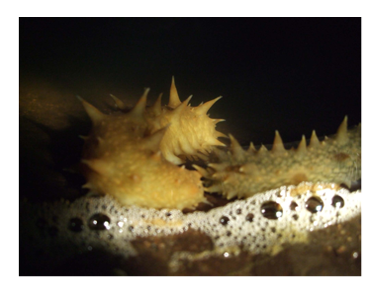
Holothurian, commonly called as sea cucumbers, is a group of economically important echinoderms.  Which are consumed either fresh or boiled or prepared as beache- de-mer (trepang) by people of Japan, Korea, China etc. Body wall, ovaries, intestine and respiratory trees are considered delicious food for Japanese. Holothurians exhibit a world wide distribution.  About 1200 species are recorded as belonging to the class Holothuridea. There are around 40 edible species.   Along the Indian coast  Holothuria scabra commonly called ‘sand fish’, is the predominant species. Whereas in Japan and Korea Stichopus japonicus  predominates.  Some species live on hard substrates like rocks, coral reef etc and vary in their habitats from foreshore to deep water zones. The other Holothurians of commercial value are  Holothuria nobilis  (black teat fish),  H. Fusogilia (white teat fish),  Actinopyga  echinites  (deep water red fish),   A.milaris  (black fish),  Thelonata ananas (prickly red fish),  Holothuria ata  (lolly fish),  H. Fuscopuncata  (elephants trunk fish) etc.

Both sandfish ( Holothuria scabra) and golden sandfish (H. lessoni) are considered to have the best potential for aquaculture because they have many attributes that make them suitable for hatchery production

BIOLOGY

The internal organs of the cucumber lay within the tube-like body chamber surrounded by the skin and a layer of longitudinal muscle bands. It is the skin and muscle bands that are the edible part of the animal. The internal organs consist of the digestive system for food processing, the gonad for reproduction, the respiratory trees for the removal of oxygen from the water, and a nerve ring that directs the operation of the muscles and tentacles.  The cucumber is capable of eviscerating (casting off) its internal body organs during times of stress which can later be regenerated.
Evisceration
The sea cucumber is a non-selective suspension feeder, taking its food indiscriminately from the surrounding water. The small bits of detritus and microscopic organisms that are floating just above the bottom are trapped by the cucumber's tentacles.There are ten tentacles that are covered with a sticky mucous and are extended in the water until they are filled with food particles. The sexes are separate, but microscopic examination of the gonad is the only reliable way to distinguish males from females. The gonad is located along one side of the body cavity and begins to produce eggs or sperm in the fall for the next spring's spawning season.  Spawning occurs from about late March to mid-April and coincides with the spring plankton bloom.
At this time the eggs and sperm are released into the water column where the eggs are fertilized and develop into a brief larval stage, at which time the animals are bright red, planktonic and called a "pentacula". By the end of May the larvae have evolved into juveniles and settled to the bottom.

LIFE HISTORY

Holothurians usually spawn in the late afternoon or evening or during night. During spawning, the males release the spermatozoa first and the females release the eggs.The males first lift the anterior end and perform swaying movements for some time after which they start releasing sperm and it continues for 1-2 hours. Ripe females, if any are present nearby, exhibit responsive behaviour. The anterior region of the female gets bulged and eggs are released through the gonopore forcefully in a continuous jet.
The mass of eggs are released appear light yellow and mucus like. The fertilization is external. Taking place in water. One adult female release about 1 million eggs. Eggs are spherical, about 180-200 microns in size. The auricularia larva hatches out after 48 hours. The auricularia larva is transparent, pelagic, it is slipper shaped and performs locomotion by the movement of flagella of the ectodermal cells that forms ridges or bands. The larva has a digestive tract consisting of mouth, pharings, stomach, and anus. There are three coelomic sacs- hydrocoel, and right and left somatocoels.

REPRODUCTION

Holothuria  scabra   attains a length of  400 mm and weight of  500g  and lives on sandy muddy bottom and become sexually mature at 18 months. The size at first maturity is 210 mm. the sexes are separate. There is no distinct sexual dimorphism. The ovary in females and testes in male are in the form of a tuft of tubules attached to the dorsal mesentery, through which the gonoduct passes terminating in gonopore situated on the dorsal side near the oral region.
The gonadal development is distinguishable into five stages such as Immature, resting, growing, mature, and post spawning phases. During the immature and resting stage, the ovarian tubules are transparent, short and thin distal end of tubules are club shaped. During grawing phase the tubules are having opaque spherical oocytes 20-120 microns in diameter. During the mature phase, the tubules are swollen containing ripe oocytes of 150-200 . It has been reported to breed twice in a year, first spawning season in from March to May and second during October to December in Gulf of Mannar.

Culture of sea cucumber

Technique for pond culture.

The ponds should be located in a area with free tidal current, The size of one pond is between 30-300mu (2-20 hectares) water depth is above 1.8-2 m, salinity is above 26 ppt year-round.  Water circulation is very important factor.  Rocks and concrete are to be applied to strengthen the inner layer of pond wall. The best substrate of pond bottom would be solid mud-sand or sand- mud; the substrate will affect the growth rate and survival tremendously. The sea cucumber culture purposes including: mud removal, disinfection and reef building. No feeding required in most of ponds. Sea cucumbers mainly depend on natural food resources. Routine monitoring of salinity, temperature, pH, alkalinity, water colour, transparency and adjust if required.The hatchery should have an algal culture unit to provide sufficient quantity of desired species of algae such as Isochrysis galbana species and Dunaliella species.
 In addition mixed culture predominated by Chaetoceros also shall be required.

Selection and construction of the culture ponds: 


 The farm sites should provide suitable conditions for the growth of sea cucumbers.  A supply of clean   and unpolluted seawater should be easily accessible. Salinity levels should range between 25 and 35, with optimal values around 27-32.  Ponds with muddy and sandy bottoms and of 2-3 hectares in size are preferred; however some operators use ponds as large as 7 hectares.  If necessary, stones or other artificial materials are placed in the pond to provide an adequate substrate for sea cucumbers to aestivate and live through cold winters.  Hard substrates should cover 50-70 % of the bottom.  The depth of water should be between 1.5 to 2 m and the seawater temperature maintained between 0-30 °C.

Dam Pond Culture

Dam pond can be build by concrete based on the local geomorphological characters in a shallow intertidal area, or a bay with rocky substrate, or by small reef islands area, where there is natural distribution of sea cucumber.  The artificial reefs are built by rocks inside the pond. The height of the dam is based on the high tide line, usually is higher than 2.0m above the ground. There are water intake and release holes underneath the dam, so the water exchange can be driven by tidal action. Seeding density:30 seeds/m2 for 1- 2cm seed, 10 seeds/m2 For 5cm seed.

Longline culture in open sea

 In an area there is less wave action, free tidal current, the existing long line system can be used for sea cucumber farming. The mesh size of the lantern nets is around 1.0cm, open and close by zipper, so it is easy to do the routine feeding operation. Scallop net, abalone net and modified plastic bucket can all be used for sea cucumber culture, and most facilities can do the poly-culture with abalone.  Seeding density is around 200- 300seeds/m2 for 5 cm seed, placed 5-8m below the water surface, The density has to be reduced as the sea cucumbers grow. This type of technique can be used as poly-culture with kelp as well.

Seabed cage culture

In a bay area, round or rectangle cages (2 ×1.5×1) were built with steel bars, covered with 1.0cm polyethylene mesh netting outside the cage and hold rocks inside the cage. A 5cm space is needed to keep the rock from the frame of the cage to prevent netting damage due to friction. Seeding density: 3-5cm seed at 200-300 seeds/m2.  Routine management includes monitoring for mesh damage and reducing the sea cucumber’s density through the grow-out period.

Artificial breeding techniques

Holothurians hatchery should have a Brood stock maintenance unit, Spawning unit, Larval rearing unit and an Algal culture unit.

Brood stock maintenance unit

The Brood stock is usually collected from wild as well as from commercial catches and induced to spawn immediately or held in land based tanks and conditioned in captivity. 
Sand fish live in high nutrient environment at densities of 100/ha. Tropical sea cucumber can be difficult to hold in captivity and reduced feeding, weight loss, and poor gonad development. The large and healthy specimens which are not injured or eviscerated during capture are chosen for breeding. Collection of breeders is done during the breeding season i.e., March to May or October to December.

Preparation of brood stock tank: 

FRP tanks of 1 ton capacity provided with 6 cm thick sand at the bottom are used for keeping the breeders brought from natural ground. They are stocked at the rate of  20-30 adults in one tank.
The sand is also brought from the natural beds. These animals usually live buried in the sand and hence the sandy bottom is recommended. The tank is filled with filtered, clear sea water of about 32-35ppt. 
The water has to be changed every day, and sand is changed once in a fortnight. Feeding is done with fresh algae brought from the sea and ground to a fine paste which is given in the tank once in a week. Excess food may cause water fouling. In case of any water fouling, the sea cucumbers eviscerate and become useless for breeding. As algal paste settles to the bottom, the sea cucumber ingests the same with sand. If the feeding is not proper the animal gets shrunken and are the specimen not fit for spawning purpose. The Brood stock rearing tanks are kept in an air-conditioned room to maintain a low temperature of 18-20 degree c.

Spawning unit


Spawning is carried out in rectangular FRP tanks of about 100 litre capacity. The provision for an immersion heater with thermostat, thermometer and aerator are provided in the tank for thermal stimulation of spawners. . After introduction the spawners into the tank having filtered, clear and clean sea water, the temperature of the water is raised by 3c-5c by using the immersion heater. This thermal stimulation induces the sea cucumbers to spawn. This is the most widely used and most reliable method to induce the holothurians to spawn.

Apart from the thermal stimulation there are three other ways to do the breeding of holothurians. These are (1) Natural Spawning (2) Stripping and (3) stimulation through drying and powerful jet of water.

1. Natural spawning

       The male and female may release the gametes into the surrounding water without any artificial stimulation.

2. Stripping

This is done mainly on an experimental scale only.  The animals are cut open from cloaca to mouth through the dorsal side. The ovary which is translucent is taken out from the female and the same is slightly dried in a shade. It is then placed in sea water in a petridish and punctured with the scissors to release the eggs into the sea water. In the same way, the testis is taken out and cut into pieces. When the sperm move out in the water it is mixed with the eggs kept in a beaker with sea water. Mild aeration fecilates higher rate of fertilization.

3. Stimulation through Drying and powerful jet of sea water

The breeders conditioned for more than a weak in the hatchery are utilized for this purpose . First of all water in the brood stock tank is removed and specimen are dried in a shade for about half an hour. After this a powerful jet of water is sprayed on the specimens for a few minutes. Then the animals are put back into the tanks with sea water.
After 1-2 hours, the animals move up the tank wall and exhibit swaying movement indicating the release of gametes. First the males release the sperm and after one hour the females release the eggs.

Larval rearing unit

After the spawn and eggs are released, the breeders are removed from the tank carefully. The fertilized eggs are removed to the rearing tanks. The auricularia lavae hatch out after 48 hours. The healthy larva occupies the surface layer of water whereas dead or deformed one settles at the lower layer of water column or at the bottom of the tank. Those settled at the bottom are siphoned out. The healthy larvae are collected in a sieve and counted using a plankton counting chamber. Then the larva are released into the rearing tank containing clean, clean filtered sea water at density of 300 to 700 numbers per liter. The larvae are taken out once in 3 days to clean the tank to avoid infestation of other organisms.The larva is fed on micro algae Isochrysis galbana, two times a day.. This may increased or decreased depending on the stage of larvae. After 4-5 days, the larvae may be fed with mixed culture of phytoplankton mainly having Chaetoceros.
Under the above conditions of rearing, the auricularia develops to Doliolaria larva between 2-3days.  The Doliolaria  larva transforms into the pentacula larva within 10days. The pentacula is the creeping stage.  Late pentacula larvae settle on hard surface provided suitable substratum is provided in the tank. Hence, Artificial settling bases (settlers) are provided for them to settle. 

Two types of settling bases are tried.

(1)  polythene sheets are taken and kept in a tank kept outdoors having enough sunlight. For 4-5 days ,  filtered sea water is circulated continuously. Benthic Diatoms and other algae settle on these sheets. These are kept suspended in the water having late Doliolaria which are about to settle. The larvae settle on them as it gets food and hard surfaces.

 (2) In another type of settlers used, the polytheen sheets are kept in a tank having sea water. In this, filtered algal extract (50 mu filter) is added. Usually species of algae sargassum are used to make the extract. Algal extracts shall stick to the sheets. Fresh extract is put daily and the water is also changed daily. After 4-5 days. when the sheet is covered with algal extract it is given as settling base for the larvae. Juveniles that settle to the hard substrate has very weak motility. Hence, algal extract is again given daily twice morning and evening. Which is filtered through 40 micros sieve, After one month, 80 micron sieve can be used, and large sized juveniles of 15-20 mm size are separated and put in tank with very fine sand. There are also fed on algal extract. Optimum density of larvae should be adjusted to 200-500individuals per square meter.

Nursing of juvenile sea cucumbers: 

As the juveniles grow, the water quality and dissolved oxygen must be maintained at the optimal level.

 Increasing aeration and water exchange rates becomes necessary. The oxygen level has to be maintained above 5 mg/L. It is also important to use formulated feed that can be digested and absorbed easily. Experimental results have shown that the growth rate of juveniles fed on the formulated feed is at least two times higher than that of individuals fed on traditional feed during the 20 to 30 day period. As the accumulation of excess food and faeces increase, harmful germs tend to multiply rapidly and can cause very serious disease outbreaks among the juvenile sea cucumbers, including what is known as the ‘stomach ulcer’. Another disease is ‘white muscle syndrome’ which causes muscle tissues to turn white and rigid.

Transfer of young sea cucumbers to the pond:

 It has been demonstrated that the release of young sea cucumbers measuring 2-3 cm in body length produce the best farming results. These will attain commercial size after 1.5 years. For an optimal growth the culture density should not exceed 10 individuals/m2.

Environmental Factors Affecting Larval Rearing

The ideal temperature is reported to be 27C-29C, Aeration is carried out in larval rearing tanks to maintain oxygen at saturation level (above 5mg/L).  pH of the water may be between 6 and 9. Normal sea water has a pH of 7.5 to 8.6 which is suitable. Normal sea water salinity (32 to 35ppt) is favourable. If salinity falls lower than 12.9 ppt. the larvae shall die.  Most favourable salinity has been shown to be between 26 to 32.7 ppt. Ammoniacal nitrogen should not exceed 500 mg per cubic meters. It tolerates a range of 70-430 mg/m3.

Larve stages
1000,000 juveniles / kg 

6000 juveniles / kg 

600 juveniles / kg 

200 juveniles / kg

Management: 

Sea cucumbers can be farmed with shrimp and certain species of finfish, although they are commonly reared alone.  Prior to stocking the ponds with the hatchery-reared sea cucumber juveniles, It is necessary to clean and sterilize the ponds as well as inoculate the seawater with benthic Diatoms.  These measures will provide an appropriate culture environment and ensure high survival rates. The addition of formulated feed will also enhance growth particularly during spring and autumn. Some field tests have shown that the growth rate of sea cucumbers fed on formulated feed is as high as two times that of non-fed individuals.

Nutritional value of seed cucumber

It is a healthy food. It consists of 21.5% proteins, Mucopolysaachraide, minerals and other biological active substance. Recent medical research proved that the muscle aging is related to reduction of acid Mucopolysaccharide. It has cancer resistant effect, it involved in the enhancement of immune system, and anti blood clotting. It can be used to cure or additional therapeutic method for some desease: such as tuberculosis (TB), stress, erection problems, stomach, duodenum ulceration, diabetes, aplastic anemia.

FISHING DEVICES IN INDIA - Fish Traps and Hook & Lines

India is blessed with abundant water resources in different forms and with diverse fish fauna. So the fishing techniques are also have much importance. Different kinds of fishing techniques are practiced in India from earlier days. These methods are wide in range from hand picking to modern trawl.
The craft and gears used in different areas are different by their design based on the fish species, available materials in the geographic region. Also based on the nature of aquatic resource. The gears are classified in many manner, Including use, materials used to make, shape etc. Fish traps and hook& line are the most primitive type of fishing gears.

Fish Traps

Trapping- an earliest method of fishing. Traps- impounding devices into which an organism is lured and troy which escape is made difficult because of the non-return device is fixed at the entrance
According to Job &Pantulu, traps being fixed engines do not require continuity of attention and vigilance on the part of the operation but can be left to function themselves and secure a catch while the operator is engaged in other occupation. Trap fishing have economic and energy related advantages over the active search and capture fisheries. They require modest investment and due to their efficiency, simplicity and the quality of catch obtained, this method is widely used in all water bodies. 
In trapping the fish remain live or in good condition for a long time. Fish traps are operated in both inland and marine waters throughout India because of it is an eco friendly method. The artisanal fishermen in inland waters use primitive models of trapping. Modern traps are generally made up of plastics replacing the conventional bamboo sticks etc. and having separate part which can be assembled and dismantled easily.
Traps made up off twigs of Palmyra leaf and bamboo splinters are used in Tamilnadu, Kerala,Lakshadweep and Andaman Islands.

TYPES OF TRAPS

PLUNGE BASKET

Plunge basket is otherwise called as cover pots. In Kerala, commonly known as ottal or kuthukoodu. 
It is conical in shape with the size of 50-70 cm height, 40-50 cm width at the lower and 15 cm at the top. Normally 10mm size bamboo splinters or sticks are used for constructing ottal. Split cane or other materials are used to keep the ribs in position.
It is mainly used to trapping freshwater Prawn (Macrobrachium rosenbergii), other prawns and crabs. The free wide ends are sharpened to push down and fixed temporarily in mud. 
Narrow end is cover with cotton cloth and stitched with cotton or soft materials to avoid damage to operator.  Plunge basket in northeast states mainly in Assam called polo,and Polui  in West Bengal.

BOX TRAP

Box trap have ‘D’ shape or rectangular shape. In north Kerala this is known as chempallikkodu because of catching chembally (Lutjanus argentimaculatus), made up of split bamboo or arecanut tree with around 1.4*0.6*0.6 m size. Bottom piece is rectangular and fabricated used 10-15 strips have 7.4m length and 30-35 with 0.6m length kept perpendicular. It is also used to catch- Etroplus suratensis , Scylla serrata and Epinephelus spp. Etc.
Box traps in northeast are bolotha /pori and tesung purag& hookuri are 

BOX TRAP


FILTER TRAP

Filter trap, locally known as padal made up of the coconut leaf sticks (eerkil) or bamboo splinters in a cylindrical shape. It is about 0.6m in length with a circular mouth of about 0.4m diameter at one end and other end of the slivers are bunched and tried so as to close it. Few traps or creeper stem hoops are fixed inside the trap to give a cylindrical shape. To prevent the slivers from opening 6-7 encircling lacings using coir are also given.Filter traps are set against the receding current in shallow rivulets and pokkali fields.
FILTER TRAP

APRONED FILTER TRAP

This is an improved filter trap popularly known as tharapadal in north Kerala.
This is a simple modification of the cone cage.
APRONED FILTER TRAP

SCREEN BARRIERS

Long leaders of converging screens erected in shallow waters to lead the fishes into the chambers fixed in the end is known as fish fences or screen barriers. This type of trap is fixed during high tide and removed during the next low tide and the fish actively swim up into the barrier.The barrier made up of stone in Gujarat known as vada.
SCREEN BARRIERS


Bamboo barrier

These are large encloses with retarding devices erected in shallow waters where an extensive tract of flooded land is in the process of draining.Life of bamboo screen is about one year where as screen made up of retting may last for several years.

Net barrier

Synthetic netting is cheaper and easy way to trap fishing by screening. The disco net is replacing the traditional theta khonda made of split bamboo and cotton twins.

ARIAL TRAP

These are specialized traps to capture fishes that jump when faced with an impediment. These fishes can be caught on the surface in boxes, rafts, boats and nets (Verandah nets). The fishes are enticed to jump out of water by placing obstacles and are caught in the air by special devices obstructing their jumps. Sometimes the fish are frightened to get them to jump out of the water. Thottilvala- a kind of aerial trap common in Kerala. The commonly used aerial traps in the northeast are Letidiya (Mud trench), and Dolonga (Verandah net).
ARIAL TRAP
A mud trench is constructed in the water channel which blocks the flow of water. The sides of the trench are elevated creating a muddy pit in between it. When the fish encounter the obstruction, they try to jump over the barrier and fall in the mud and collects them by hand. Channa sp. and Puntius sp. are commonly caught through the aerial trapping. It is also used for the trapping of shrimps in Kerala, known as padal changadam. This is a fishing technique based on the shrimp’s reflex action to physical stimulation and is being used for harvesting the shrimps in perennial aquaculture farms in Kerala.

TUBULAR TRAPS

These are the traps or enticing devices exclusive of those made of textile which prevents the escape of fish by means of trap doors provided with non return valves. The traps vary in shapes. The catch comprises of fishes such as Mastacembalusaculeatus, M. armatus, Mysrus spp. Channa, etc. 

SHELTER TRAPS 

Specifically designed and operated considering the nature of fish to take safe shelter are known as shelter traps or habitat traps are provided with tree branches, shrubs, and twigs. They come in various size and shapes: Quadrangular, Conical, Cylindrical and Circular. Placed in low lying areas out of the water after 3 to 5 days and the fishes are taken out after removing the materials provided for shelter. 
These traps are tied to a fixed bamboo pole with a strong rope to prevent displacement in the water. 
The catch mainly- Mastacembelus armatus  (tire track eel), Mystus spp., Puntius spp., Clarias batrachus, Channa spp, Notopterus notopterus (bronze featherback), small prawns.Etc. 

HOOK & LINES

Hook and line this might be the one of the oldest and famous fishing method all over the world and one of the most dominant fishing methods. It is very economically viable technique to exploit the large pelagic, column and demersal predator fishes. The principle of line fishing is to offer bait and entice the fish or any other aquatic organism so that it can be lifted from the water together with the bait. In the primitive fisheries there existed curved hooks made of various perishable materials of plant and animal origin like Thorns, bones, tortoise shell, oyster shell and whale bone.Metals are used in modern days. The most important characteristic of hooks are their gap and their spread to ensure that fish shall be unable to spit the hook out with the bait after swallowing it. It should penetrate the mouth of the fish when the bait is taken or the line is pulled so that the fish becomes fast.Modern fish hooks come in a variety of sizes, shapes, and materials.

Two types of hooks:

J-hooks -manufactured with the point of the hook parallel to the shank of the hook creating a J-shape.
Circle hooks -manufactured with the point of the hook turned perpendicularly to the shank forming a circular

Traditionally J-hooks have been used in most fisheries, but recent efforts have been made to promote the use of circle hooks in more fisheries. Both J-hooks and circle hooks can be barbed or barbless. Barb- an additional point that protrudes from the inside of the hook that helps to retain the bait on the hook as well as a fish once it has been caught. Barbless hooks do not have an additional point and thus it is easier to remove from the fish when caught, which is considered less damaging to the fish.

COMMON HOOK AND LINE GEAR

HAND LINES

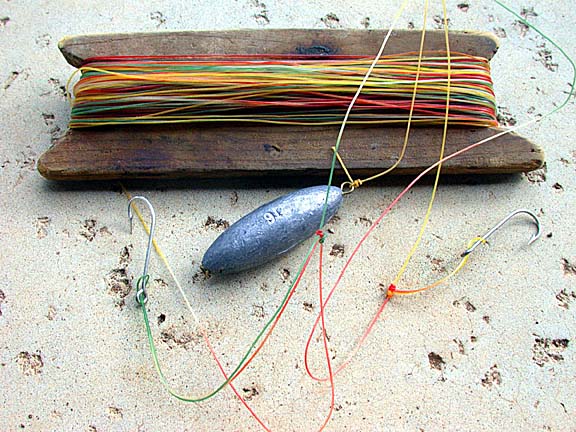
Hand line may be defined as the simplest form of hook and line gearconsisting of a hand held single line weighted and with one or more hooks spacedalong the far end of the line. Hand lines are popularly known as Choonda orkaichoonda and are operated in all types of water bodies.  Length of the line also varies from 2 to 50 m, depending on the depth of operation. Hand lines can be operated very easily. Fishermen operate lines from shore, canoe or any elevated platforms like bridges and dams. They are dropped into the water at places where the fishes are expected and fishermen feels usually with hands when fish bites. Baited lines having a length of  20-30 m.
hand line

LONG LINES

Long lines can be classified by how they are fished: 
Set long lines: stationary lines that are anchored to the vessel, the seafloor or to an anchored buoy. 
Drift long lines: attached to floats that drift freely with the ocean currents. 

Long lines popularly known as beppe is operated in all places for fish and eel.  Mainline is 200-800 m long and is made of Polypropylene twine of 2 to 3 mm diameter or Poly amide monofilament of l to1.2 mm diameter. Generally round barbed hook of size ranging from number 8-12 are used depending on the target species. Prawns and cut pieces of fish are used as bait.Pelagic species targeted by drift long lines include Tunas, Sharks and Swordfish. Demersal species targeted by set long lines include Cod and Halibut. Long lining is considered one of the most fuel-efficient methods of commercial fishing. 


VERTICAL LINES

In enclosed water bodies the fishing lines can be allowed to drift freely attached to a float. lt can be a tackle with a single hook or a vertical or horizontal long line with several hooks. A kind of vertical line, popularly known as kenichi, is operated in weed infested canals and fields of Alappuzha, Kerala.
Jigger lines are a specialized type of vertical line, fitted with specialized ripped hooks, used primarily in Squid fisheries. Multiple hooks are evenly spaced along the main line, which is hauled in using jerky vertical movements. This movement simulates the realistic movement of common prey species of the targeted species. 

TROLLING LINES 

Trolling lines are lines with baited hooks that are dragged behind trollers as well as other types of vessels. Trolling speeds vary depending on the target species, but generally are between 2.6-8.1 mph. 
A single line or multiple lines may be connected to outriggers that extend from both sides of the boat.
 Targeted species vary in size from small fish like Mackerel to large pelagic species of tuna. 

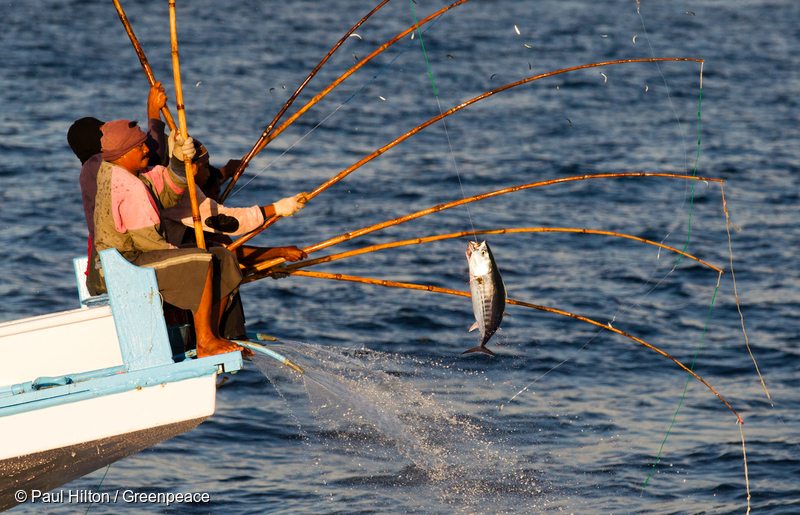
POLE AND LINE

Pole and line consists of a hook and line attached to a pole. If the line is much longer than the rod it is wound around a reel. Both artificial and natural fish are used to lure the prey. Poles are commonly made out of wood or fiberglass and can be operated by hand or mechanized. Tuna species are commonly caught by the pole and line method in commercial fisheries of Lakshadweep. Pole and line fishing can occur from the surface to great depths, the only limiting factor is the amount of line used.

MULTIPLE HOOK AND LINES

Lines with multiple hooks, a type of jigging line with 20 to 30 branches on one end. The main line is made of PA monofilament having 1.2-1.4 mm dia. and about 80 m length. 20-30 branches each  having a hook. Length of the branch line is about 10 cm and it is tied to the main line at 10-15 cm intervals. A lead piece weighing 150-200 g is attached to the end of the line to keep the line under the current. This type of lines without bait is dropped from the dam and it is continuously pulled and released. 

Thursday, 8 November 2018

CULTURE AND SEED PRODUCTION OF CRABS

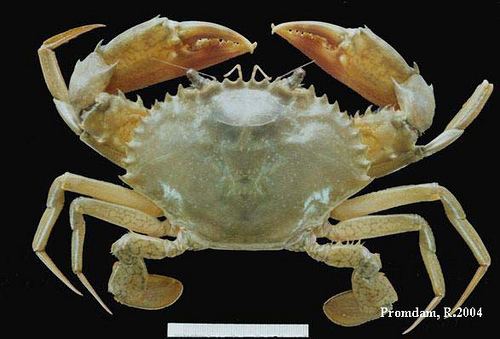
Among the marine edible crustaceans, crabs, rank third by virtue of their delicacy and demand for human consumption. In India, 600 hundred species of crabs are available, of which only two species are used to the culture. (Scylla serreta and Scylla tranquebarica). S. serreta is smaller and S. tranquebarica are larger species. Scylla species are generally known as mud crabs or green crabs.
 In malayalam they are known as “patcha njandu,kuzhi njandu and kattu njandu”.

Scylla serreta


S. tranquebarica can be easily distinguished from S.serrata by polygonal marking on the carapace.
 Among the marine crabs, mud crabs are the only species which can remain alive out of water for a considerable period of time. In earlier periods crabs are cultivated along with milkfish, but later on great demand, the monoculture is practiced. Major markets for Indian live mud crabs are in Singapore, Malasia, Taiwan, Hong Kong, and China. Hatchery production technology of mud crabs is presently available in Philipines, Indonesia, China and in India.
Scylla tranquebarica


TAXONAMICAL  POSITION OF MUD CRABS

Phylum: Arthropod
Class: Crustaceans
Order: Decapods
Family: Portunidae
Genus: Scylla
Species: serrata

Parts of a mud crab

HABITAT OF MUD CRABS

Adult crabs are found both in marine and estuarine waters. Mud crabs possess a pair of paddle-shaped swimming legs, which help them for fast swimming. Mud crabs in their megalopa stage enter in estuaries, coastal lagoons, and backwaters, grow fast, attain maturity and become berried. For hatching of the larvae, the berried female migrates into the sea waters. They bury under the sandy bottom. These are common among the mangrove forest.

FEEDING

Crabs generally feed on crustaceans, mollusk, small fish, detritus, and plants.But in culture, 18˚c frozen fishes are given as feed, after thawing the feed is given for crabs. 

IDENTIFICATION OF SEX

The immature and mature males of mud crabs have a slender and triangular shaped abdominal flap on the ventral side of the body. The immature females have a broad and triangular shaped abdominal flap. matured females have a semicircular shaped abdominal flap. The male crabs normally grow faster than females and attain bigger size than the females. Based on the gonadal development, 5 stages of maturity are recorded i.e., immature, maturing, late mature, fully mature and spent.
Male and Female abdominal flap

LIFE CYCLE

Mating occurs soon after moulting of a matured female. The male inserts spermatophores into the spermatheca. When the egg matures, it passes through spermatheca where fertilization takes place internally. The fertilized eggs are shed out through the opening of the vulvae and spawning event takes place. The spawned eggs are placed at the abdominal flap of female crab with the help of ciliary action of pleopods. Generally, the crabs spawn near the seawater lagoons, bays and coastal areas. Scylla serata prefers salinity in the range of 28-35 ppt for spawning.

The life cycle of the mud crab is divided into two phases; 

Early post-larval stage and grow out stage.
The eggs hatches into Zoea, which pass through various stages (zoea; 1-5) metamorphose into megalopa and migrate to brackish water areas.Then they enter into the crab instar stage and the entire process takings a total period of 25 days. It continues to grow to become juvenile, sub-adult until it attains adult stage. Upon attaining maturity and mating they migrate to sea for spawning.

Fecundity

The number of eggs found attached to the pleopods of female mud crabs varied from 0.3 to5 million. Breeding season is throughout the year.

SEED PRODUCTION OF MUD CRABS

SELECTION OF BROOD STOCK FROM WILD:

Healthy broodstock is collected from wild, for the immediate breeding programme, only mature female or berried female is collected from wild.
  1. Brood must have; 
  2. hard exoskeleton,
  3.It should be free from all pathogens,
  4 all the appendages are to be intact, 
  5 no damages on the body. 
Berried female

TRANSPORTATION OF BROOD:

After the collection of berried female, chelipeds are tied with jute fiber or banana fiber. 
Then they are to be kept in the bamboo basket filled with wet seaweeds /cotton wool/paddy straw/mangrove twigs. Finally, the basket should be covered with wet jute cloth with proper ventilation. In case of berried females, the animal has to be brought in wet condition from the collection point and kept individually in the thermocol container. The chelipeds need not be tied with ropes because it may damage the eggs.

ACCLIMATISATION: 

Once the broodstocks are brought to the hatchery, the animals are carefully removed from the transport container to allow them in an empty basin. Then clean sea water is to be added slowly for acclimatization or it is advised to acclimatize them in clean water at collection point itself in order to maintain fertilized eggs in a healthy condition

QUARANTINE SECTION: 

For removing the pathogens the animals are treated with formalin @150 ppm dosage for 30 minutes.

STOCKING: 

After acclimatization and quarantine section the berried crabs are directly stocked into the black colored FRP spawning tanks of 250-300 liters capacity. Covered with a lid and filled with cleaned and disinfected sea water with aeration. Black tanks are always preferred and should be kept in a spawning room with individual spawner.

WATER QUALITY MANAGEMENT:

Salinity-28-32ppt
pH - 7.5-8.5
Temperature – 28 - 32⁰C
Dissolved oxygen - > 4.0 mg/liter

BROODSTOCK FEED:

Fresh fish, squids, bivalves, mussels etc are given as food. 
The mature broodstock can be fed with 5-10% of body weight (40% in morning and 60% in evening).
 The frozen fishes are thawed first before feeding.

INDUCED BREEDING:

 In crabs, gonadal maturation can be induced by eyestalk ablation. During this process, one of the eyes is ablated to remove gonad-inhibiting hormone-secreting gland situated in the eyestalk. 
Ablated eyestalk has to be treated with iodine ointment for healing the wound and preventing the infection. Spawning would take place between 2 and 8 weeks depending upon the ovarian development.

LARVAL DEVELOPMENT: 

The eggs hatch into Zoea. It has five stages (Zoea 1, 2 3, 4, 5). After hatching of eggs the spawner is shifted into another tank. Before collecting the larvae, the aeration is switched off and the incubation tank is covered with a lid, leaving a small opening. Since the larvae are photo-tactic in nature an electric light is kept near the opening of the lid in the corner to attract the larvae. The accumulated larvae are collected by fry bowl or using siphon net. The collected larvae are transferred into larval tanks. Rearing of larvae is continued in the same tank till it reaches the Zoea – 5 stages. (stocking density 70 numbers/liter).Once the larvae cross zoea 5 sage, its metamorphosis into megalopa stage. (Stocking density 1-2 no./liter). To avoid cannibalism certain hideouts are provided.
Temperature 25-32⁰C, Ph-7.5-8.5 and DO- >4mg/liter are provided for larval tanks

FEED FOR LARVAE: 

For early zoea stages, rotifers (Brachionus plicatilis) are given as feed. After 7 days rotifer with microalgae is provided. Day 8 onwards artemia are given as feed. As an alternative, egg custard, fish meat, squid meat etc., can be given. Megalopa develops into crab instar, and then it develops into sub-adult and adult.

NURSERY REARING:

Hatchery produced crab instars 0.3-0.5cm carapace width are stocked in HPDP Happas in brackish water ponds. Where the salinity range is 15-35ppt. Hideout is provided to avoid cannibalism. The minced fish meal can be given as food. Based on the feeding and management nursery days may vary from 30-40 days to attain the “matchbox” crab let.


CULTURE OF CRABS:

Nursery-reared crablets are used to grow out culture. Normally 6-7 months are required to attain a marketable size of average 500 gms. Another way used to grow out culture is growing of juveniles sizes in small brackish water pond for two months to attain the average size of 50-60gms. 
 The size of the grow out pond can vary from 0.25-1 Ha, with proper inlet and outlet water management. Soil texture with a high slit is not suitable for crab farming. Minimum 1-meter water depth is required. Stocking density 1 juvenile crab/m². Stocking density 1 juvenile crab/m². Stocking of crablets can yield an average survival of 60% and stocking of juveniles yield 80% survival rate.

PEN CULTURE: Crablets can also be cultured in pens with average stocking density is 1no/m². The advantage of pen culture is easy growth, faculitate stocking of different sizes of crabs in different pens which may ultimately increase the survival and yield. Crabs generally feed on mollusks, fish, other crustaceans and annelids.


Featured post

PEARL FARMING - THE GOLD FARMING

Pearls have been known to mankind since the beginning of civilization.  These structures are secreted by the mantle (i.e., the skin) o...

Popular Posts